
Please Don't Feed That Sick or Injured Bird - Here's Why
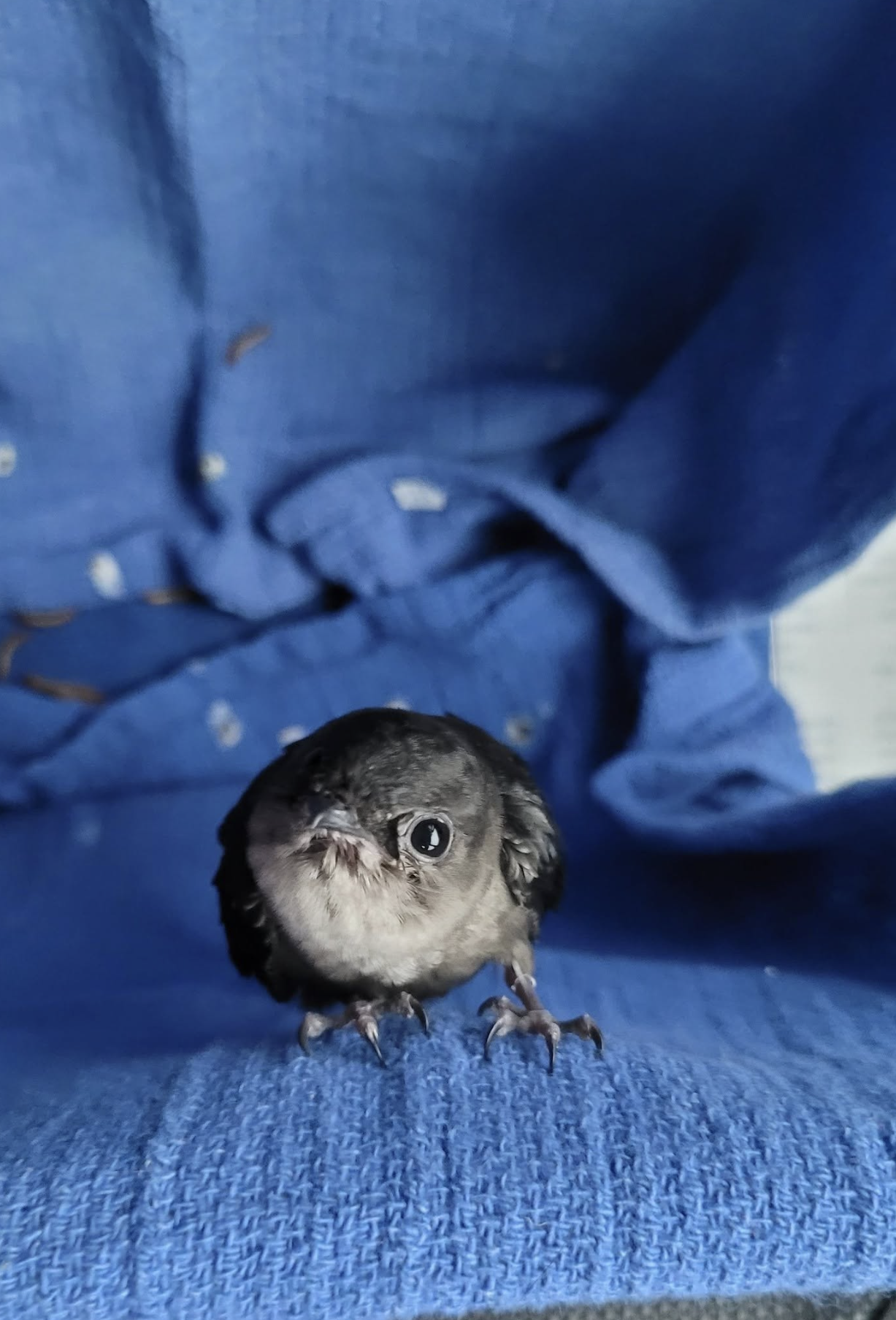
Recently, a Chimney Swift arrived at our clinic in rough shape. A well-meaning finder had discovered the young bird after it fell from its nest and, wanting to help, had been feeding it raw egg.
But chimney swifts eat only flying insects, caught on the wing, their entire lives. Raw egg is not part of their diet at any life stage. By the time the swift reached us, the egg that had been fed was all over its face and had dried and sealed its eyes shut. Our rehab team spent hours carefully, gently cleaning the bird's eyes and feathers before we could even begin proper treatment — time that would otherwise have gone toward the specialized insectivore diet and care the bird actually needed to recover.
It's a clear example of how even a caring, well-intentioned response can put a bird in more danger — not less. Here's why we always ask people to call us first, and not to offer the bird any food or water:
🐤 A cold bird can't digest food.
Baby birds regulate body temperature very differently than adults. If a nestling or fledgling is cold — which most orphaned or displaced babies are — its body can't process food at all. Feeding a cold bird doesn't nourish it; it can cause food to sit undigested and lead to a fatal crop or gut infection. Also, it takes energy to digest food and a sick or injured bird needs ALL their energy to go into healing rather than digesting.
🐤 Every species needs a very specific diet.
There is no single "bird food." A baby robin, a baby hawk, and a baby chimney swift all require completely different diets formulated for their species and life stage — and almost none of it is sitting in a home pantry. Egg, bread, milk, jam, or even birdseed can cause malnutrition, choking, or the kind of injury we saw in the swift above. Unfortunately A.I. and online searches can give improper guidance, like feeding a bird egg when this is not an appropriate diet for most birds.
🐤 It's illegal — even with good intentions.
Under both federal and Maine state law, it is illegal for anyone without a rehabilitation license to keep, feed, or care for a wild bird. This isn't red tape for its own sake — it exists because untrained care, even offered with love, has a high chance of doing harm.
🐤 An injured bird may need imaging.
If a bird has been hit by a car, flown into a window, or otherwise been injured, it may need X-rays or other diagnostics to check for fractures or internal injuries. Like humans preparing for anesthesia or imaging, birds often need an empty stomach for these procedures to be done safely.
🐤 Water is easy to offer in the wrong way.
It seems like the most harmless thing to provide — but birds offered water at home are frequently doused or soaked in the process. A wet bird can lose the ability to regulate its body temperature and can damage the delicate waterproofing of its feathers.
🐤 Birds are tougher than you think.
This is the part that surprises people most: a bird can safely go several hours or even days without food or water while it travels to us. What it often cannot survive is the wrong food, an overfull stomach, or the stress of improper handling. Doing nothing and calling us is almost always safer than doing something.
"But I feed birds at my feeder every day — what's different?"
The birds visiting your feeder are choosing to be there. They're healthy, self-sufficient, and self-selecting a diet that works for their species and physiology — because they can fly away if they don't like what's offered. A backyard feeder supplements the diet of a bird who doesn't need critical care.
An injured, sick, or orphaned bird is in an entirely different situation. It can't choose or regulate what it's given, and its body may already be under significant stress. That's the difference between a treat and a medical risk.
This is still different from feeding birds improper things, like giving bread or snack foods to ducks and geese, which can make them obese and sick, or jam for orioles (we get them covered in the sticky jam, in which they can also drown).
What to do instead
If you find a bird in need, the most helpful thing you can do is call our hotline right away:
📞 (207) 382-6761 — staffed 9am–5pm, 365 days a year
Our team will walk you through safe containment (usually just a box, a towel, and a quiet space — no food or water needed) and connect you with one of our volunteer transporters, part of a statewide network of over 120 people ready to bring birds to us for care.
You make this work possible
It is only possible to have happy endings in stories like the chimney swift's because of supporters like you. Every hour of patient, careful cleanup, every species-specific formula, every X-ray is funded by gifts from our community.
If this newsletter helped you understand our work a little better, consider making a gift today to help us be ready for the next call.
As always, thank you for caring enough to ask the right question before acting — that instinct, paired with a phone call to us, is exactly what these birds need.
