
The Birds That Catch Their Food on the Wing — and Why They're Disappearing
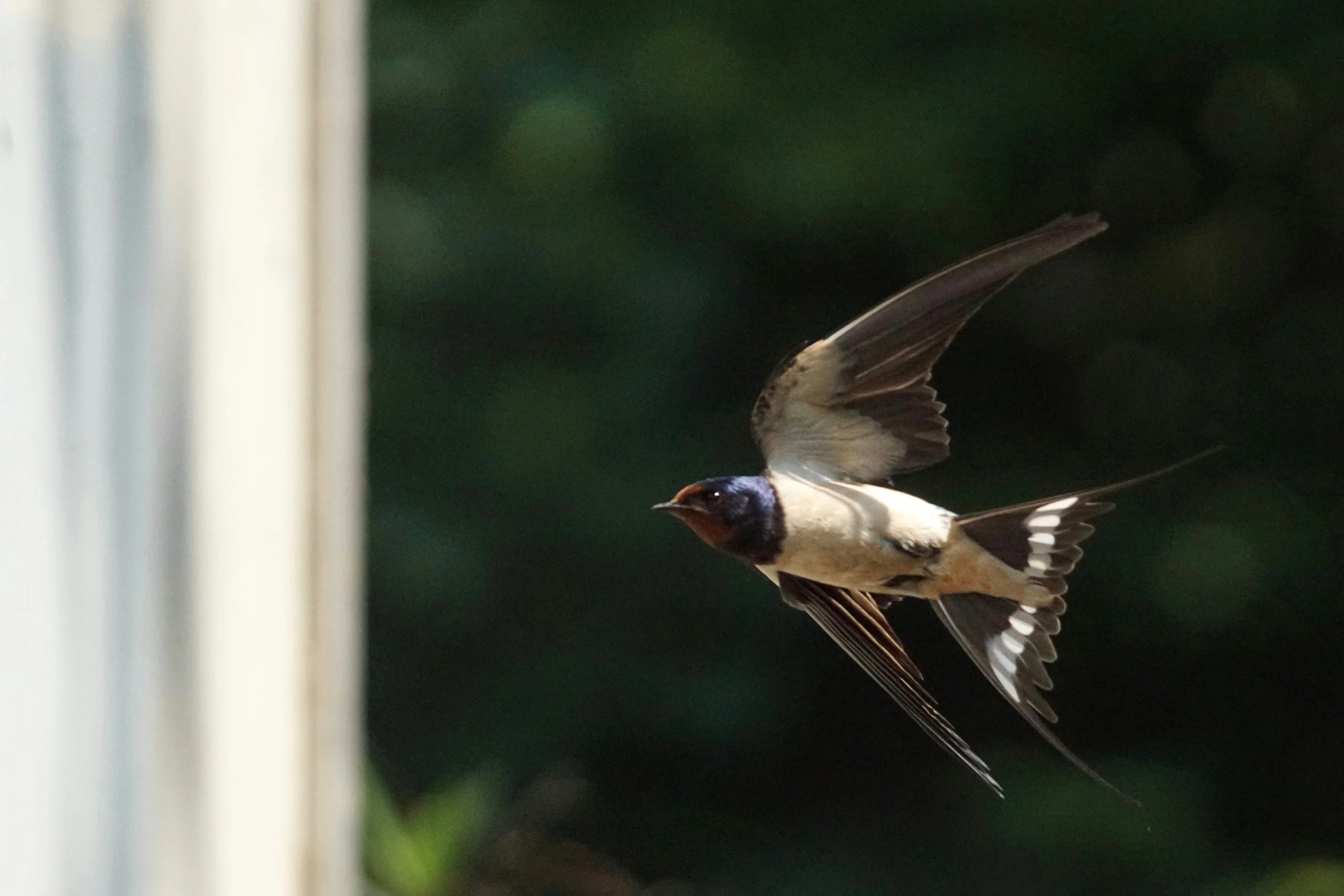
Watch a Barn Swallow work a meadow on a summer evening and you'll understand immediately why people fall in love with them. They move like nothing else — sweeping low over the grass, banking hard, skimming the surface of a pond, snatching insects from the air with a precision that seems almost impossible. It is one of the great free performances in Maine's natural world.
And it is becoming increasingly rare.
Barn Swallows belong to a group of birds called aerial insectivores — species that catch and eat insects while in flight. The group includes swallows, swifts, flycatchers, and nightjars, all of them specially adapted to a life spent largely on the wing. Across North America, aerial insectivores are experiencing some of the most severe and widespread declines of any bird group. In Maine, the situation is particularly urgent.
Maine's second Breeding Bird Atlas — a sweeping, multi-year survey of the state's breeding birds led by thousands of volunteers — documents steep range contractions for several swallow species that were once common across the state. Bank Swallows and Cliff Swallows have each lost roughly half of their historic breeding range in Maine. Both species are now officially listed as Threatened in Maine. Every other swallow species in the state carries a designation of Special Concern.
These are not obscure birds found only in remote corners of the state. These are the swallows that nest under bridges you cross every day, in the riverbanks along roads you drive every week, on the barns and buildings that define Maine's rural landscape. Their absence, when it comes, will be felt.
The causes are complex and likely differ among species and places, but several threads run through nearly every swallow's story.
Aerial insectivores depend entirely on flying insects — and flying insects are in steep decline across much of North America, driven by pesticide use, habitat loss, and broader environmental change. When the food disappears, the birds that depend on it follow.
Nesting habitat is also disappearing. Bank Swallows excavate burrows in sandy riverbanks and bluffs — habitats that are easily disturbed by development, erosion control, and human activity along waterways. Cliff Swallows build intricate mud-cup nests on bridges, culverts, and buildings — structures that are frequently cleaned, modified, or replaced during nesting season, often without awareness of the birds using them.
Barn Swallows face a particular challenge: they have long depended on open barns and agricultural buildings for nesting, but as farming practices change and old structures are sealed or demolished, suitable nest sites become scarcer. Even a well-intentioned renovation can eliminate a colony that has returned to the same site for generations.
The good news is that there are real, meaningful actions that individuals and landowners can take to support these birds — and some of them require almost nothing. Here is what you can do:
Reduce or avoid pesticide use. Every insect you protect is a meal for a swallow. Consider integrated pest management practices that minimize chemical use.
Protect wetlands, shorelines, and open foraging habitat. These are the spaces aerial insectivores depend on to feed. Supporting conservation efforts that protect these areas makes a difference.
Leave active nests alone and in place. This is not optional — removing active bird nests is a federal crime under the Migratory Bird Treaty Act. But beyond the legal obligation, active nests represent a precious investment. Leave them be.
Keep barns open and accessible where Barn Swallows are nesting. If swallows are using your barn or outbuilding, that is something to celebrate and protect. Keeping access open during the nesting season costs very little and means everything to the birds.
Install Tree Swallow nest boxes in suitable habitat. Tree Swallows readily use nest boxes in open areas near water, and installing boxes is one of the most direct ways to support swallow populations.
Keep pets indoors during nesting season. Cats attacks are one of the primary reason birds get injured and die. Keeping your cat indoors and your dog on a leash can protect birds like Whippoorwills and other nightjars that raise their young on the ground safe.
Wildlife rehabilitation cannot reverse the broad forces driving these declines. But it can give individual birds — birds that have already beaten difficult odds just to reach us — a fighting chance to return to the wild and contribute to the populations that remain.
That work depends on your support. If the story of Maine's aerial insectivores moves you, please consider making a gift to Avian Haven today. Every dollar goes directly toward the care of wild birds in Maine — including the swallows, flycatchers, and swifts that are running out of time.
