
The Spring Migration Is Here — And So Are We
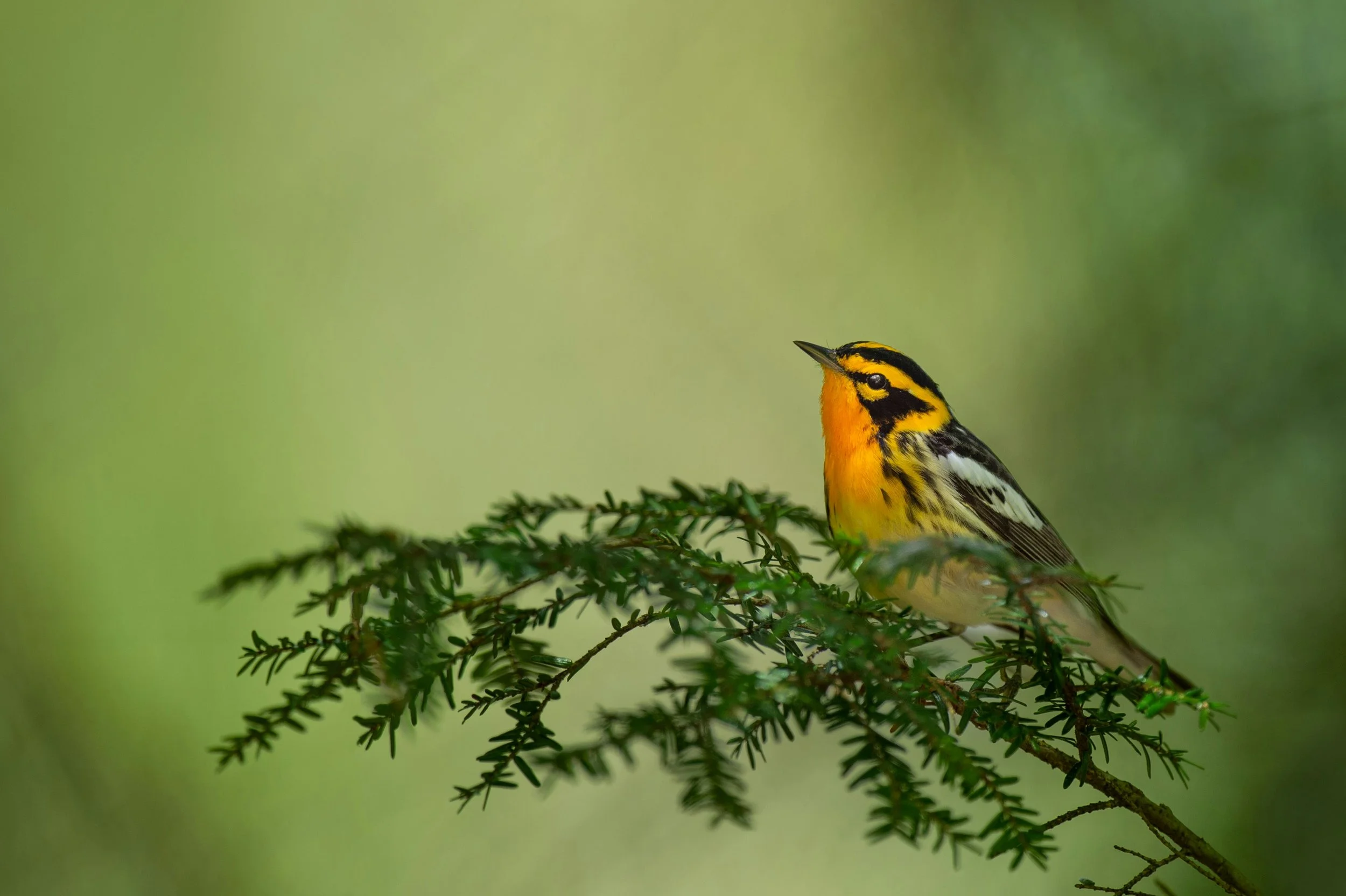
Right now, three out of every four birds in our care are migrants.
It's a number that surprised even us when we counted. But it makes sense. Step outside on any morning this month and you can feel it — something is moving through Maine. The forests are louder than they were a week ago. New songs appear overnight. A bird you haven't seen since last autumn is suddenly at your feeder, or moving through the shrubs at the edge of your yard, and then gone again by afternoon.
Spring migration is underway, and Maine is at the center of it.
The flyway overhead
Every spring, billions of birds move north along the Atlantic Flyway, one of the great migratory corridors of the Western Hemisphere. The flyway stretches from the wintering grounds of Central and South America, up through the Caribbean and the Eastern Seaboard, all the way to breeding territories in the boreal forests of Canada and the Arctic tundra. Maine sits squarely in its path — a critical waypoint where birds rest, refuel, and continue their journeys.
The sheer scale of it is hard to comprehend. On a single good migration night, radar can show millions of birds moving through New England airspace. Warblers traveling from Colombia. Shorebirds from Brazil. Hummingbirds that weighed less than a penny when they crossed the Gulf of Mexico. All of them threading their way north through the dark, navigating by stars and magnetic fields and instincts we still don't fully understand.
It is, without question, one of the most extraordinary wildlife events on Earth. And it happens every spring and fall, largely invisibly, right above our heads.
Beautiful — and brutal
Migration is also the most dangerous time of year to be a bird.
After hundreds or thousands of miles of travel, migrants arrive in Maine exhausted, hungry, and often navigating unfamiliar terrain in darkness. Their reserves are depleted. Their immune systems are taxed. They're moving through landscapes filled with hazards — windows, roads, towers, cats — that don't exist on their breeding or wintering grounds. A minor injury that might resolve easily on familiar territory can become life-threatening when a bird has nothing left in reserve.
This is what our current patient census reflects: ruby-throated hummingbirds fresh from Central America. Warblers mid-journey to Canadian breeding grounds. A peregrine falcon. An ovenbird. A red-eyed vireo. Wood ducks, mergansers, Canada geese, and robins moving along the coast and inland waterways.
All of them arrived at Avian Haven because something went wrong mid-passage, at the moment they could least afford it.
A Maine organization with a continental reach
Avian Haven is based in Freedom, Maine — population just over 700. We are, by any measure, a small organization in a small place.
And yet the birds in our care right now connect us to the boreal forests of Quebec, the cloud forests of Costa Rica, the tidal flats of Patagonia. When we stabilize a Black-and-white Warbler on its way to its breeding territory, or help a yellow-bellied sapsucker recover from a window strike before the brief northern breeding season closes, we are participating in something that belongs to the entire hemisphere.
The Atlantic Flyway doesn't recognize state lines. Neither does our mission.
Every community along the flyway — every birder, farmer, child who has ever watched a hummingbird at a feeder — has a stake in the safe passage of these animals. Maine is where we happen to be. But the birds we care for are shared by all of us.
What spring looks like inside our walls
For our rehabilitation team, spring migration means the intake phone rings more. It means species we haven't seen since last autumn are suddenly back on our treatment tables. It means the careful, skilled work of assessing a bird that is already at the edge of its reserves and determining what it needs — rest, fluids, wound care, time — to have a chance at completing a journey it was born to make.
It also means urgency. A migratory bird is not like a year-round resident that can convalesce slowly through the winter. It has a biological clock running, hormones surging, a window of time in which it must reach its breeding ground or miss its season entirely. Speed of intervention matters. Expertise matters. Having a skilled, fully-staffed team ready when the flyway delivers its next patient — that matters enormously.
This is what your support makes possible.
You make the journey possible
Avian Haven accepts no government funding and charges nothing for the care we provide. Every bird we treat — whether it breeds in the boreal forests of Canada or winters in the tropics — is supported entirely by people who believe wild birds deserve a chance to complete their journey.
Spring migration won't wait. Neither do we.
If you'd like to stand with the birds passing through Maine this season, we would be deeply grateful for your support. A gift of any size helps us stay ready — for the warbler that comes in tonight, and the one that will come in tomorrow.
