
The State of Songbirds in Maine
The number is almost too large to hold in your mind: since 1970, North America has lost nearly 3 billion birds. That's roughly one in every four individual birds that existed just fifty years ago. And it isn't happening only to rare or endangered species — it's happening to the birds most of us grew up with. The ones at our feeders. The ones whose songs mark the start of every Maine spring.
An estimated 862 million sparrows. 618 million warblers. 439 million blackbirds. 145 million finches. Gone.
Even species we still think of as common are quietly disappearing: one in four Blue Jays, one in three Baltimore Orioles, one in four Rose-breasted Grosbeaks have been lost in a single human lifetime.
Here in Maine, we are not immune to these trends. But thanks to a remarkable, multi-year effort just completed by thousands of volunteers across the state, we now have a clearer picture than ever of what is happening to our birds — and where there is still reason for hope.
What Maine's Breeding Bird Atlas is telling us
Maine Inland Fisheries and Wildlife recently completed its latest Breeding Bird Atlas, a comprehensive survey documenting which bird species are breeding across the state and where. By comparing results to past atlases, scientists can see how bird populations have shifted over the decades — and what they found is a bird community in the middle of profound change.
The atlas tells a story of winners and losers, and the line between them often comes down to adaptability.
The birds that are holding on
Some familiar faces are doing well, particularly species that have learned to live alongside people. The Tufted Titmouse has expanded dramatically northward since the 1980s. The Northern Cardinal, once largely confined to Maine's southern coast, is now found across far more of the state. White-breasted Nuthatches are growing in number. American Goldfinches remain stable. For these species, milder winters, suburban habitats, and backyard feeders have provided a lifeline.
Maine's beloved Black-capped Chickadee — our state bird — remains widespread and relatively stable, a testament to its remarkable adaptability. Its close cousin, the Boreal Chickadee, tells a very different story: a specialist of northern conifer forests, it has experienced clear range contractions and population declines, near-disappearing from Downeast Maine entirely.
The birds that are struggling
For every success story, there are species quietly vanishing from parts of Maine where they once thrived. Baltimore Orioles have declined significantly, with losses concentrated in northern and Downeast Maine. Wood Thrush — one of the most beautiful voices in any Maine forest — has experienced steep drops in breeding occurrence. Barn Swallows, Cliff Swallows, and Bank Swallows have lost dramatic portions of their historic breeding range in the state; Bank and Cliff Swallows are now listed as Threatened in Maine.
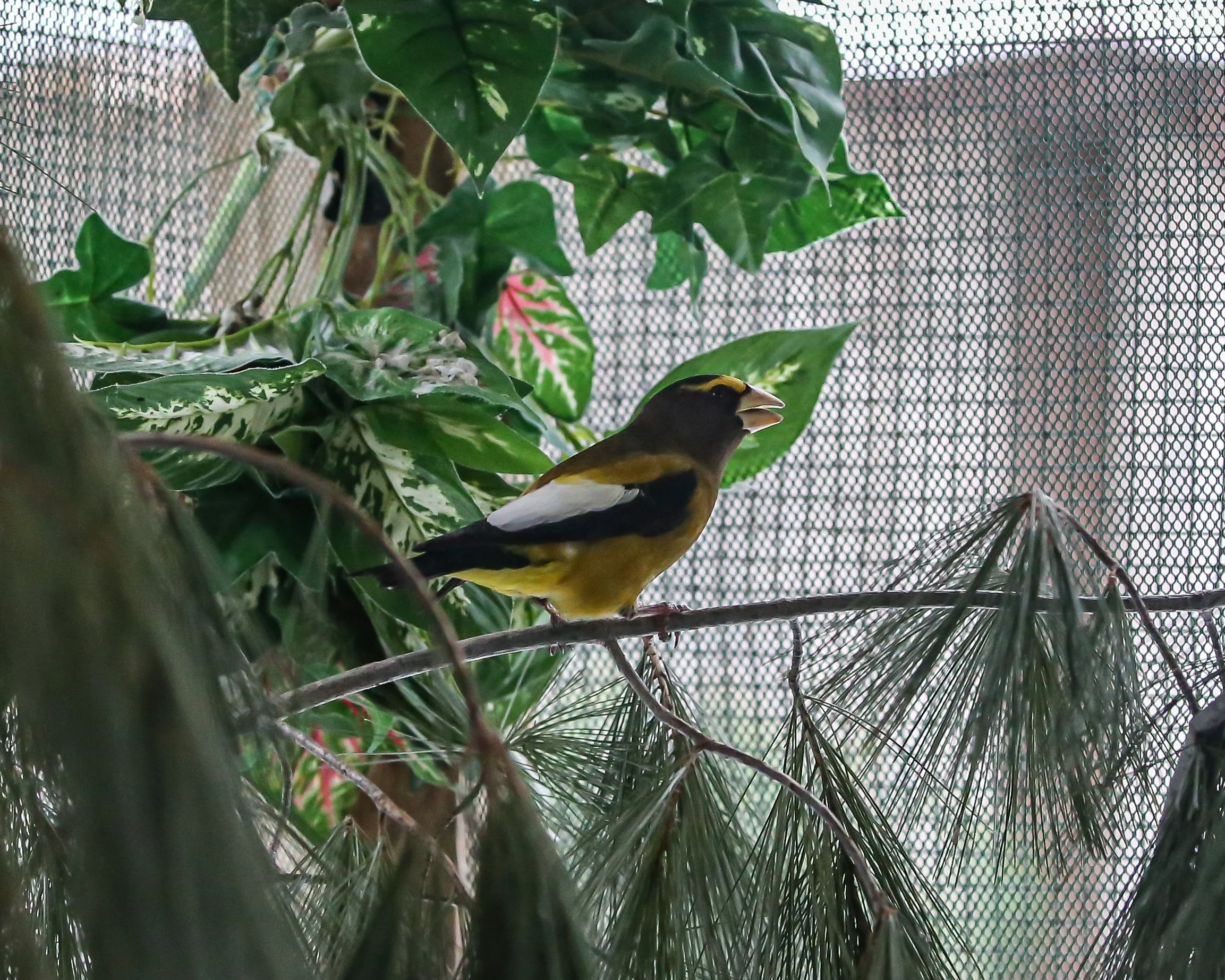
And then there is the Evening Grosbeak — a species that may appear at your feeder in great numbers during some winters, but whose breeding population in Maine has contracted dramatically northward, with an estimated 90% population loss over just a few decades.
The causes are interconnected: habitat loss, declining insect populations, pesticide exposure, climate-driven changes in forest composition, and the many hazards of living near people — window strikes, outdoor cats, and disease at crowded feeders among them.
What this means — and what we can do about it
Mackenzie Roeder, Songbird Specialist at Maine Inland Fisheries and Wildlife and a member of the Avian Haven board, has been close to this work. She sees a direct line between the trends in the atlas and the birds that arrive at rehabilitation centers like ours every spring.
"Wildlife rehabilitation plays an important and, I think, under-recognized role in conservation," she told us. "Rehabilitators are providing critical care to individual animals, but they're also giving us a real-time window into the challenges birds are facing, whether that's disease, specific human-wildlife conflicts, or broader environmental stressors. That on-the-ground perspective is incredibly valuable as we work to understand and support Maine's songbird populations. Just as importantly, it helps foster a deeper connection between people and wildlife, and a shared sense of responsibility for their care."
The Atlas expected to be published in Fall 2026 and will soon be available for pre-order.
