
Before You Rescue That Baby Bird, Read This
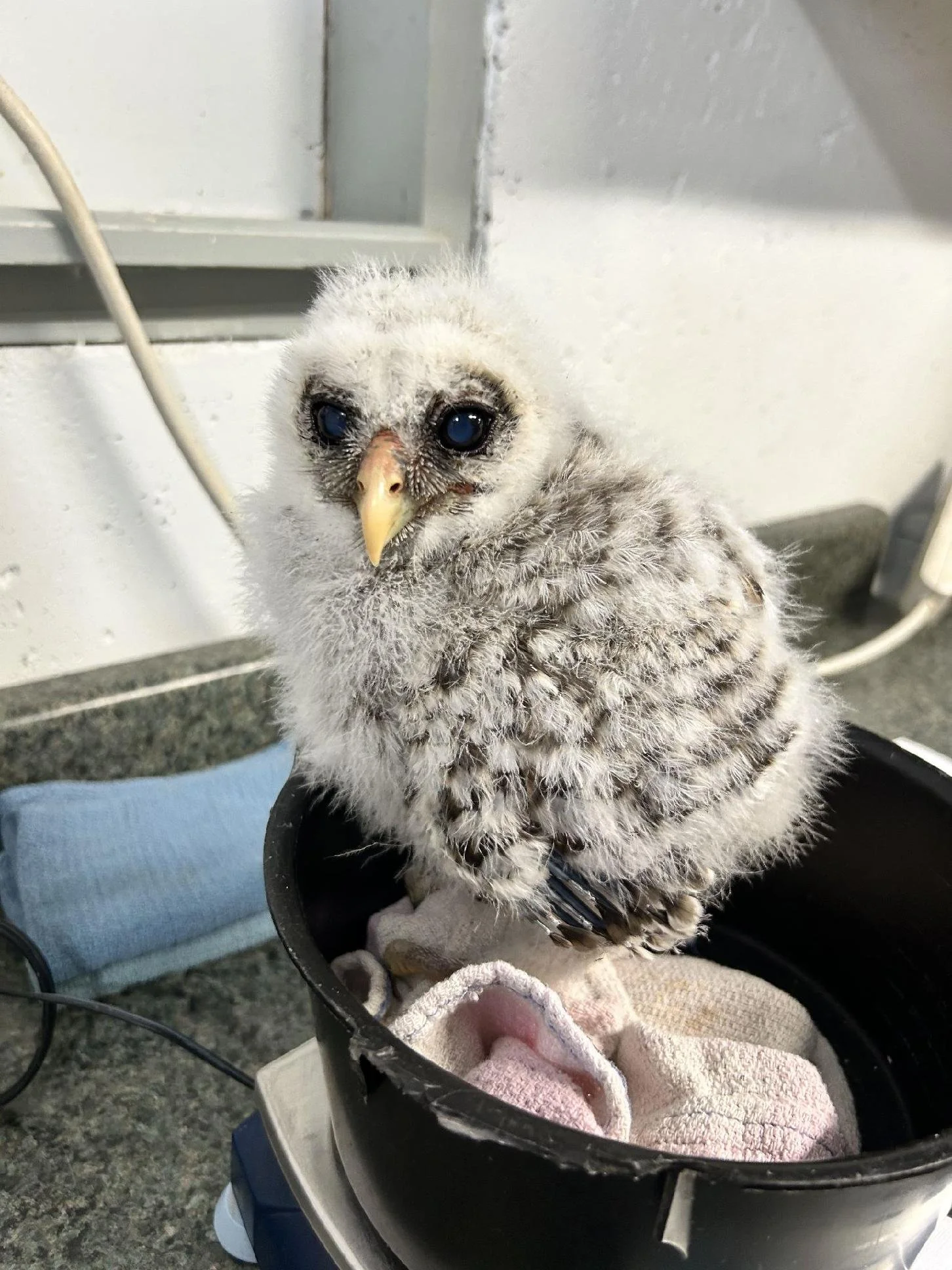
You're walking through your backyard on a warm May morning when you spot it: a small bird sitting on the ground near the base of a shrub. It's not a nestling — it has feathers — but it doesn't quite look like an adult either. It's just... sitting there. Looking at you.
Your first instinct is to help. You wonder if it's injured, if it fell from a nest, if its mother has abandoned it. You pull out your phone and search for what to do. Maybe you can find our number. Maybe you call.
We're so glad you do!
Every spring and summer, Avian Haven fields dozens of calls exactly like this one. A bird on the ground. A worried person. A moment of uncertainty about whether to intervene. These calls are one of the most important things we do — not just because we love talking with people who care about birds, but because what happens in that moment matters enormously for the bird's survival.
Here's what we want every person in Maine to know:
A fledgling on the ground is usually exactly where it's supposed to be.
Fledglings are baby birds in the in-between stage — perhaps they've left the nest but aren't yet strong flyers. This is a completely normal part of the development of cedar waxwings, robins, and crows, for example. For several days, sometimes longer, they live close to the ground, hopping around, practicing short flights, and learning about the world while their parents continue to feed and watch over them. You might not see mom or dad nearby, but that doesn't mean they aren't there. Parent birds are often perched quietly out of sight, keeping a close eye on their chick — and on you.
The single best thing you can do for a grounded fledgling is leave it alone.
We know that's hard to hear when every instinct is telling you to scoop it up and keep it safe. But removing a healthy fledgling from its environment takes it away from its parents, its natural diet, and the wild upbringing it needs to survive. Even with the most skilled rehabilitators, hand-raised birds face steeper odds than those raised by their own parents in the wild. The kindest intervention is often no intervention at all.
How do you know if a bird truly needs help?
That's exactly why we're here. When you call Avian Haven, our team will walk you through what to look for. Is the bird bleeding or visibly injured? Are its eyes open and alert? Is it able to move away from you? We may ask you to send a photo so we can get a better look. Often, the answer is the same: this bird is doing just fine. Go back inside, keep your pets indoors, and let nature do its work.
Occasionally, though, a fledgling does need us. If it has been attacked by a cat or dog, has a visible injury, or if you have reason to believe both parents have been killed — those are the moments when rescue makes a real difference. We take every call seriously, and we will always help you figure out the right next step.
This spring, our team is preparing to receive over 1,000 baby birds who genuinely need our help. Birds with real injuries. Birds who have lost their parents. Birds who, without intervention, would not survive. To give every one of them the best possible chance, we need to be ready — with the additional staff, equipment, and supplies to provide expert care from the moment they arrive.
That's what our Baby Bird Shower campaign is all about. We're hoping to raise $100,000 this Spring to support the 1000 babies we’re expecting this year.
If you've ever called us about a bird in your yard — or if you've ever simply cared about what happens to the wild creatures around you — this is your chance to make a direct impact.
🐦 Support the Baby Bird Shower 🐦
And the next time you spot a fledgling on the ground? Take a breath. Watch from a distance. And know that we're just a phone call away if you need us.
