
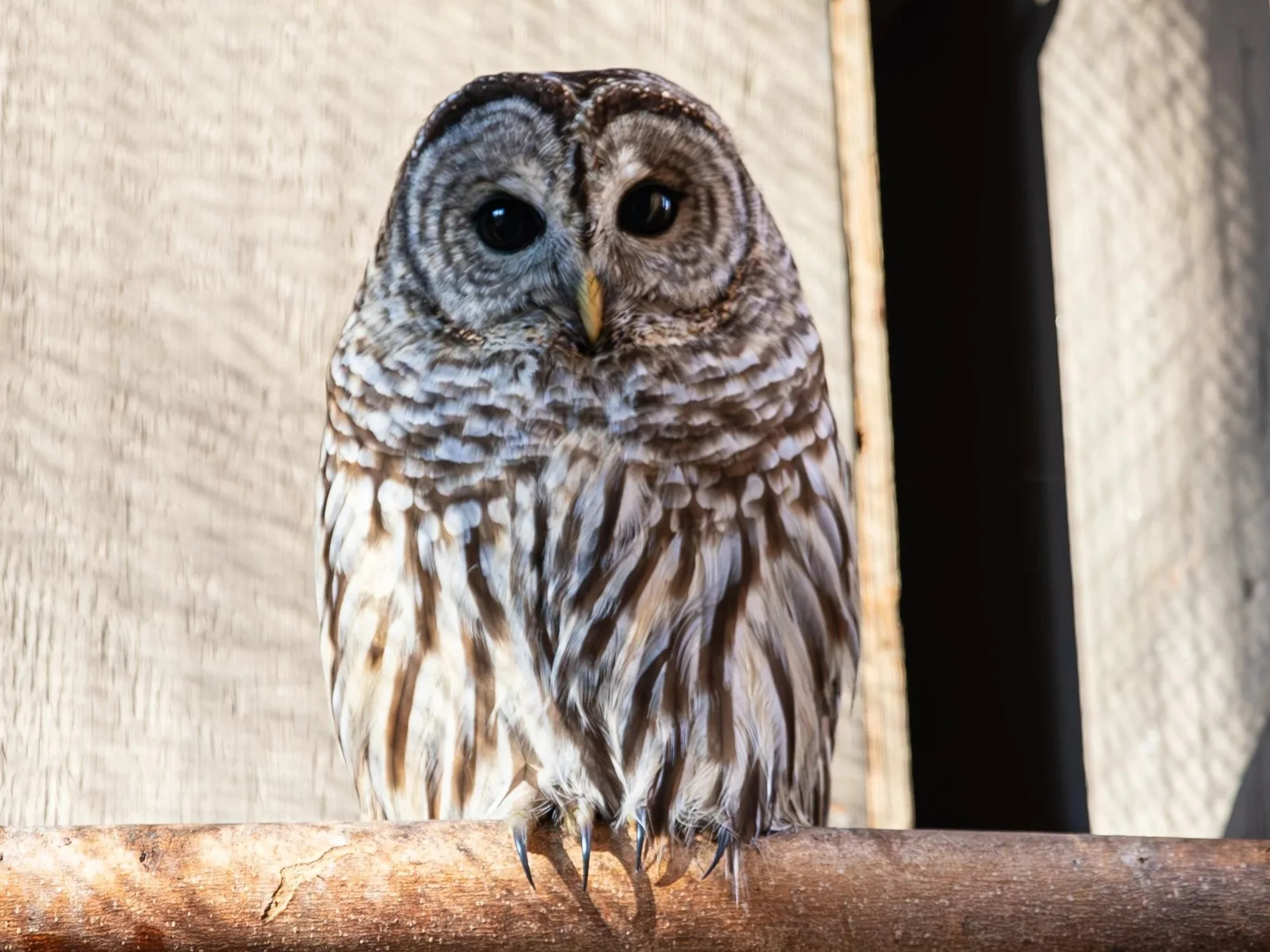
Last Sunday we set our clocks back an hour. For most of us, that means an extra hour of sleep and darker drives home. For barred owls, it means danger.
The barred owl is the most common owl in Maine, and it’s one we know well at Avian Haven. This year alone, 106 barred owls have come through our doors, and most of them arrived during the darker months between the fall and spring time changes. The leading reason is one we see far too often: collisions with cars.
Why the time change matters
Barred owls hunt at dusk and through the night. Before Sunday, most of us drive home in daylight. After the clocks change, the evening commute falls right into the hours when owls are most active. More cars on the road at the moment owls are hunting means more collisions.
Why owls hunt near roads
Roads give barred owls two things they’re looking for: a clear view and easy prey. Mice and voles are drawn to roadsides by the food people leave behind. An apple core tossed out a window or an empty chip bag in the ditch can bring rodents to the road’s edge, and the rodents bring the owls.
When an owl swoops down after its prey, it flies low, often right at the height of a windshield. In the moment, it’s focused on its meal, not on oncoming headlights.
How barred owls hunt
Barred owls are remarkable hunters, built to find food in the dark:
They hunt by ear as much as by sight. Their ear openings sit at slightly different heights on each side of the head, which helps them pinpoint exactly where a sound is coming from. Their round facial disk works like a satellite dish, funneling sound toward their ears.
They fly almost silently. Soft, fringed edges on their flight feathers muffle the sound of air moving over their wings, so prey rarely hears them coming.
They’re patient. Barred owls are “sit-and-wait” hunters. They perch quietly on a low branch, listen and watch, then drop down on their prey.
They can hear prey under the snow. In winter, a barred owl can locate a vole moving beneath the snow and plunge in feet-first to catch it.
They’ll get their feet wet. Barred owls have been seen wading into shallow water to catch frogs, crayfish, and small fish.
You’ve probably heard one. Their call is often described as “Who cooks for you? Who cooks for you-all?”
How you can help protect barred owls this year
🦉 Keep food and trash in your car. Even “natural” items like apple cores and banana peels draw rodents to roadsides, and owls follow.
🦉 Slow down at dusk and after dark, especially on wooded roads and near fields and wetlands.
🦉 Watch for low-flying shapes crossing in your headlights, and be ready to brake.
🦉 Pick up roadside litter when it’s safe to do so, and keep trash cans secured at home.
🦉 If you hit or find an injured owl, call our hotline at (207) 382-6761 (9am–5pm daily, for bird emergencies). Owls have powerful talons, so please don’t handle one with bare hands. Our volunteers across the state are ready to bring birds to us.
Help us be there for every owl
Each barred owl that comes to us needs a careful exam, treatment, a quiet place to heal, and constant attention throughout the day until it’s ready to return to the wild. As the darker months begin, we’re preparing for more owls in need, and your support makes their care possible.
Donate today to help injured barred owls get back to Maine’s forests where they belong.
You can also order one of our snazzy new Barred Owl hats here, and all profits go to support Avian Haven.
