
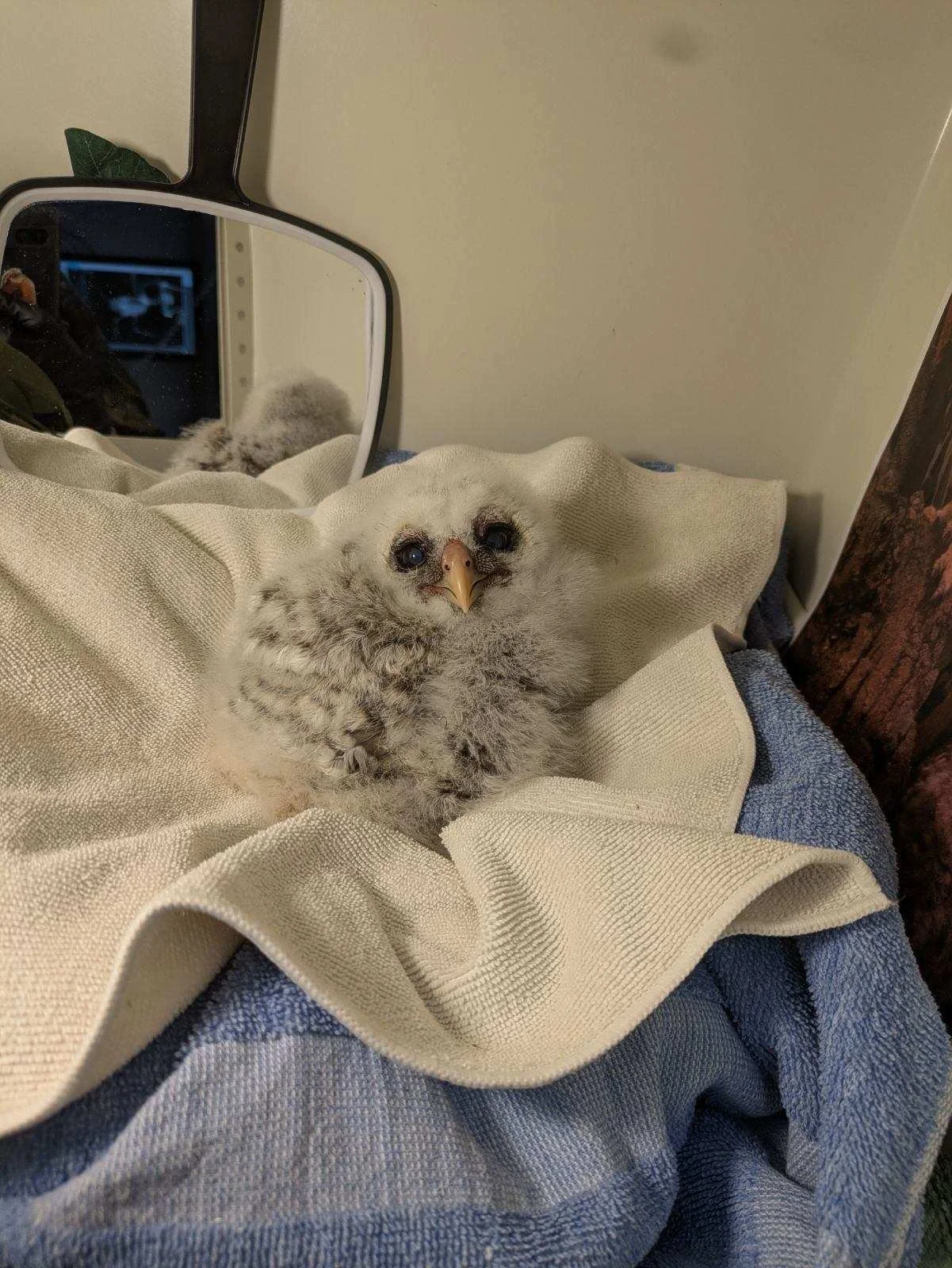
Our hotline receives about 12,000 calls a year, and as many as 2,000 a month during the busy spring and summer season. A small team cares hands-on for the roughly 3,000 birds we take in each year, so every minute on the phone is a minute spent away from a patient.
Many calls are questions we can answer right here. Reading this page first helps you act quickly and keeps the line open for birds in crisis.
Hotline: (207) 382-6761, 9am to 5pm, every day of the year. Please call only for a bird emergency. For everything else, email us at info@avianhaven.org.
Before you call
Having a few details ready helps us help the bird faster:
Where you are: the town and the exact spot where you found the bird.
What you see: the species if you know it, or a short description (size, color, adult or baby).
What happened: a window strike, a cat, a car, or something else, if you know.
Where the bird is now: safely contained in a box, or still loose.
A photo: if you can take one without stressing the bird, it can help us identify it.
Finding a bird
A bird is in my house or building. Can you come catch it?
We're sorry, but we can't. Our care is reserved for birds that are injured, sick, or orphaned, and we don't have staff available for removals.
A healthy bird indoors usually finds its own way out. Try opening a window or door, closing off the rest of the room, and turning off the lights inside so the opening is the brightest spot. Keep pets and people out and give the bird quiet time. If the bird is hurt, or has hit a window or wall, please contain it (see below) and call us.
I see an injured bird, but it isn't with me. Can you come get it?
We can send a volunteer only when the bird is already secured in a box, or when it is easy to reach and you are staying with it. Our volunteers can't search for a bird that has moved on or chase one that can still fly away.
If you can safely contain the bird, please do, then call us. The best thing is for you to bring it directly to us. If you’re unable, we have about 120 volunteers across Maine who may be able to bring it to us if you can't drive it yourself.
A bird hit my window and now seems fine. Does it still need help?
Yes. Every bird that strikes a window should be checked by a rehabilitator. Even if it flies off or seems to recover, window strikes often cause internal injuries that aren't visible right away and can to lead to problems down the line if the bird doesn’t come in right away. Please contain the bird and call us.
I found a baby bird. What should I do?
Many young birds out of the nest are fledglings that are learning to fly and are still cared for by their parents. Others truly need help. Go here to learn more about whether a baby bird needs help. If you're still unsure, or the bird is injured, please call.
Keeping a bird safe until it reaches us
How do I contain a bird?
Find a cardboard box a little larger than the bird and poke small air holes in the lid or sides.
Line the bottom with a soft cloth or paper towel.
Gently place the bird inside and close the lid.
Keep the box in a quiet, warm, dark place, away from pets, children, and noise.
Wash your hands after handling the bird, then call us.
Please resist the urge to check on the bird often. Wild birds are easily stressed by handling and human contact.
Should I give the bird food or water?
No. Please don't offer any food or water. An injured or weak bird can inhale water into its lungs, and the wrong food can make it sicker. Many species also need very specific diets. The kindest thing you can do is keep the bird contained, quiet, and warm, and get it to us as soon as possible.
After a bird comes to us
What will happen to the bird I bring you?
Our trained rehabilitation staff will examine the bird and give it the care it needs, whether that's treating an injury, fighting an illness, or raising an orphan. Our goal for every patient is to return them to the wild, healthy and ready to thrive. Since 1999, we've taken in more than 45,000 birds and are prepared to take all 400+ species found in Maine. If the bird will be better served somewhere else (ie. it needs surgery or specialized care) we will transport it to the appropriate caregiver.
Can I take care of the bird myself, or keep it?
We understand the wish to help, but no. Under state and federal law, it is illegal for anyone without a wildlife rehabilitation permit to care for or keep a wild bird. Avian Haven holds both a Maine and a federal permit, and has the experience and equipment to care for all of the 400+ species found in Maine. Bringing the bird to us is the best way to give it a second chance.
Can I find out how the bird I brought in is doing?
Yes, we're glad you asked. Please call or email info@avianhaven.org with the patient number if you have it.. If you don't have it, include the date you found the bird, its species if you know it, your name, and the location where it was found. Give us a few days and we will get back to you, and thank you for your patience while we look it up.
Other questions
Do you help domestic birds, like chickens, ducks, or pet parrots?
No. Our permits and our care are for wild birds only. For a sick or injured chicken, pet bird, or other domestic bird, please contact a veterinarian who treats birds or your local animal shelter.
Will you speak at my event, school, or library?
We'd love to hear from you. Please email admin@avianhaven.org with the details of your request, including the date, location, audience, and topic you have in mind.
How you can help
Our hotline, our care, and our statewide volunteer network are offered free to the public, and they are made possible by people like you. Individual donors provide the majority of our funding.
A gift of any size helps us answer the next call, feed the next orphaned nestling, and release the next healing hawk back into Maine's skies. Make a donation at avianhaven.org.
You can also help by volunteering as a bird transporter in your area. Email info@avianhaven.org to learn more.
