
By now, Maine’s ruby-throated hummingbirds are well on their way to their wintering grounds in Central America and Mexico. If your hummingbird feeder is still hanging, now is the perfect time to bring it in, give it a thorough cleaning, and store it until spring.
And while you’re at it, this is a good moment to think about all the feeders in your yard. Feeders bring us joy and give birds a boost during lean months, but when they aren’t cleaned regularly, they can also spread disease.
When many birds gather at one spot, illness can pass easily from bird to bird. This year alone, Avian Haven has taken in at least 25 finches with mycoplasmal conjunctivitis.
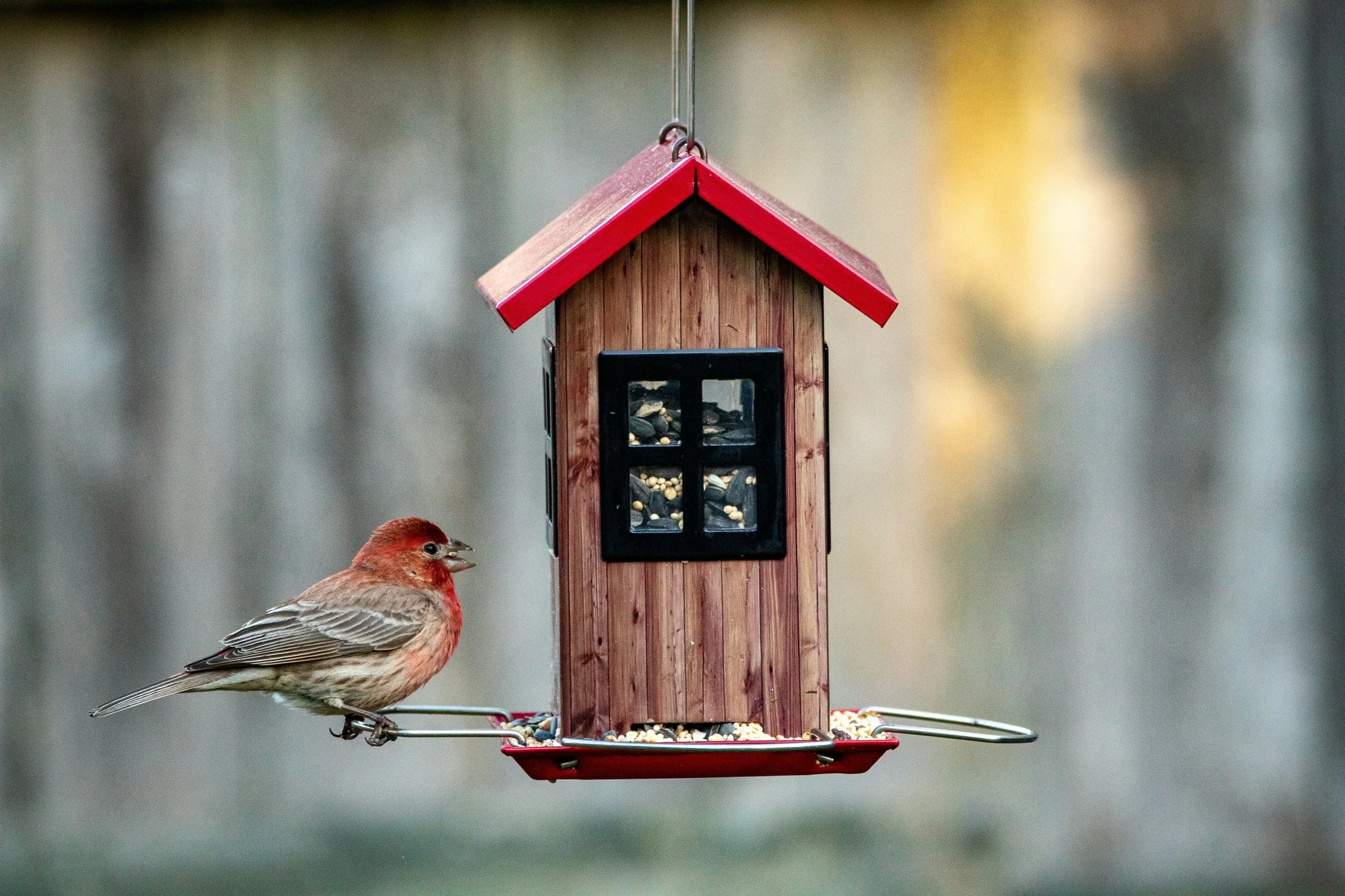
This bacterial eye infection is most often seen in House Finches but also affects goldfinches, Purple Finches, and other feeder visitors. Affected birds have red, swollen, crusty, or weepy eyes. Dirty feeders and moldy seed can also spread salmonella and other illnesses.
Conjunctivitis starts with red, watery eyes, but it often gets worse quickly. The eyelids swell and crust over until a bird can barely see, or can’t see at all. A bird that can’t see can’t find food or water, so it grows weaker and thinner by the day. It can’t spot a hawk or a cat in time to escape, and it may fly into windows or other obstacles it would normally avoid.
Many of these birds end up sitting fluffed and still beneath feeders, too weak to leave the one place they know has food. Without care, most don’t survive. And while they’re still visiting feeders, they can pass the infection on to the other birds in your yard.
With treatment and a warm, quiet place to recover, many of these birds can regain their sight and return to the wild. That’s the care our team provides, and it’s why a clean feeder matters so much: every bird who never gets sick is one less bird who has to fight its way back.
The good news is that a little regular cleaning goes a long way. Here's what you need to know:
Taking down your hummingbird feeder:
Empty any remaining nectar and take the feeder apart completely.
Scrub every part, including the feeding ports, with hot soapy water and a small bottle brush, then soak in a dilute bleach solution (see below) or a vinegar-and-water mix.
Rinse very well and let every piece dry completely before storing, so mold doesn’t grow over the winter.
How to clean your seed and suet feeders:
Empty out old seed and scrape off any caked or clumped material.
Scrub with hot soapy water.
Soak for about 10 minutes in a solution of 1 part bleach to 9 parts water.
Rinse thoroughly and let dry completely before refilling. Wet seed spoils quickly.
Rake up spilled seed and hulls beneath your feeders, where droppings and mold can build up.
Wear gloves, and clean feeders outdoors or in a utility sink, not where you prepare food.
How often should you clean?
Seed feeders: at least every two weeks, and more often during heavy use or wet weather.
Hummingbird feeders (next season): every time you refill. Change nectar every one to two days in hot weather and at least weekly when it’s cool. Use 1 part white sugar to 4 parts water, with no red dye.
Birdbaths: scrub and refill every few days.
Feeding birds through the winter
Winter is when feeders can help the most. Cold days are short, and birds need to eat a lot just to stay warm through long nights. Chickadees, nuthatches, woodpeckers, juncos, and finches will all make good use of a well-kept feeder.
Offer high-energy foods. Black-oil sunflower seed attracts the widest variety of birds, suet gives woodpeckers and nuthatches a rich source of fat, and nyjer (thistle) seed is a favorite of goldfinches and redpolls. Skip bread and kitchen scraps, which offer little nutrition.
Keep seed dry. Brush snow and ice off feeders after storms, and toss any seed that’s wet, clumped, or moldy.
Provide water. A heated birdbath can be a lifeline when natural water sources freeze.
Place feeders safely. Feeders within 3 feet of a window, or more than 30 feet away, reduce the risk of deadly window strikes. Keeping cats indoors protects birds on the ground below feeders.
Mind the bears. Maine’s black bears are drawn to bird feeders, so wait until they’ve settled into their dens, usually by early December, before putting seed feeders out for the season.
Keep cleaning. Disease doesn’t take the winter off. Continue cleaning feeders every two weeks, and rake up seed and hulls when the ground allows.
If you see a sick bird
If a bird at your feeder has swollen or crusty eyes, or seems lethargic and fluffed up, take all your feeders down for about two weeks so the birds disperse. Clean the feeders thoroughly before putting them back up. If a sick bird can be safely contained, call our hotline at (207) 382-6761 (9am to 5pm, every day) for guidance.
Every year, Avian Haven takes in about 3,000 sick, injured, and orphaned wild birds from all 16 Maine counties, and nearly all of them come to us because of human-caused hazards. Simple steps like keeping feeders clean help prevent harm before it starts. When birds do need help, our team and a statewide network of volunteer transporters are here for them.
Your gift helps provide food, medicine, and care for every bird who comes through our doors.
