
They Traveled Thousands of Miles to Get Here, Now We're Helping Them Get Home
Right now, in the last days of September, an extraordinary migration is underway.
Maine's tree swallows — birds that spent the summer nesting along our fields, marshes, and shorelines — have mostly already gone, forming massive pre-migration flocks before heading south toward Central America and the Gulf Coast. Shorebirds that summer in the arctic are moving through the region this very week, staging along the coast to fuel up for a non-stop flight over open ocean to South America, some of it lasting more than a week without landing. And our ruby-throated hummingbirds are making their final push south, packing on fat for a Gulf of Mexico crossing they'll fly in a single non-stop trip, weighing barely more than a penny each.
Maine sits along the Atlantic Flyway, one of the great migratory highways of the Western Hemisphere. Late September is peak fall migration here — the flyway overhead is busier right now than almost any other time of year, as millions of birds pass through, stop to rest and refuel, or move on toward wintering grounds as far away as southern South America.
The journey is brutal
A recent feature in The New Yorker, "The Incredible Journey of a Migratory Shorebird," follows scientists tracking Hudsonian godwits — birds moving through our region this week — on flights of roughly ten thousand miles between Alaska and South America. To survive, researchers have found, these birds actually shrink their own digestive organs to save weight, then regrow them once they land. It's one of the more astonishing adaptations in the animal kingdom, and a reminder of just how much migration asks of a bird's body.
Fall migration brings its own particular dangers. Birds are often young, making their first journey south without ever having flown it before. Adults are worn down from a summer of nesting. And the obstacles are unrelenting:
🐤 Light pollution disorients night-flying migrants, pulling them off course and into cities
🐤 Windows are one of the single largest causes of bird deaths in North America, and fall's disoriented young birds are especially vulnerable
🐤 Severe weather, worsened by a changing climate, can strand or kill birds by the thousands in a single event
🐤 Habitat loss along the flyway — from grasslands to tidal mudflats — removes the stopover sites birds depend on to refuel
🐤 Shifting food supply, as climate change alters when insects and fruit are available relative to when exhausted birds arrive
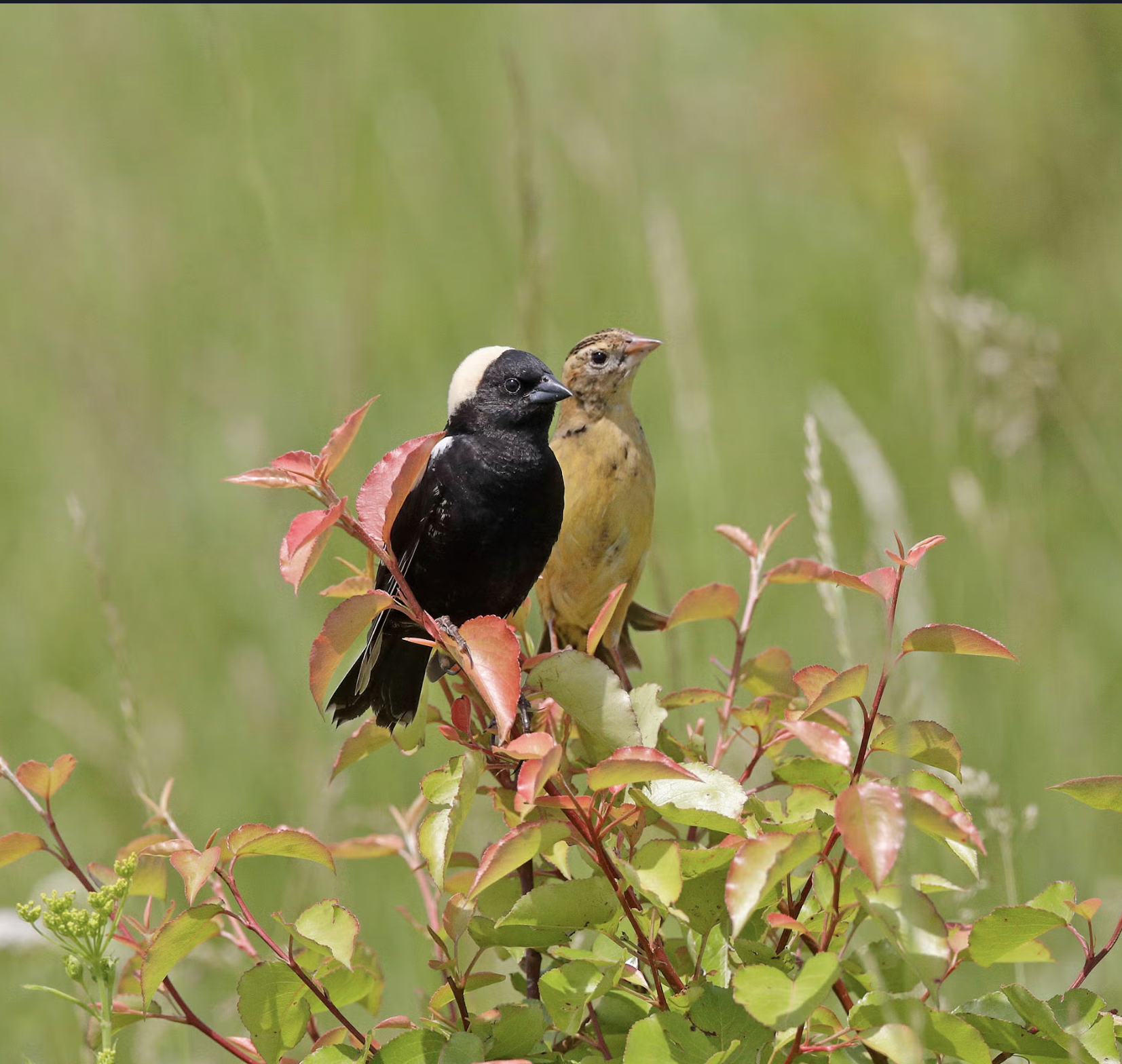
For grassland birds like bobolinks, the journey south comes right on the heels of a breeding season already complicated by haying schedules that can destroy nests before chicks ever fledge. Shorebird populations, meanwhile, tell a sobering story at the population level: migratory shorebird numbers have dropped by more than half since 1980.
A new tool for understanding what's at stake
This fall, the Maine Bird Atlas is set to be published — the most comprehensive assessment of the state's breeding and wintering birds ever completed. From 2018 to 2022, thousands of community-science volunteers combined with standardized surveys to document where Maine's birds occur, when they're present, and how they use the state's habitats. It's only the second such atlas Maine has ever produced, and it allows researchers to measure exactly how much has changed since the first one, four decades ago.
For an organization like ours, that kind of data matters. It gives us — and everyone working in bird conservation — a clearer picture of which species are struggling, which habitats are most critical, and where our work can have the greatest impact in the years ahead. We'll be watching closely as the Atlas is released, and we'll share what it tells us about the birds we see every day.
This is where we come in — for every one of them
Maine is home to more than 400 species of wild birds, and Avian Haven is prepared to treat any of them, in every season. That's not a small claim. It's the reason our facility looks the way it does.
A boreal chickadee settling in for winter and a herring gull don't need the same things to heal. A warbler passing through on its way south has nothing in common, medically or behaviorally, with a broad-winged hawk migrating overhead, or a common loon pulled from a lake. So we've built specialized care for all of them:
Pools and ponds for the waterbirds and seabirds who need to swim, dive, and waterproof their feathers as part of recovery — loons, mergansers, gulls, and other species that would never heal properly on dry land alone
Large flight enclosures where raptors, herons, and other big-bodied birds can rebuild the strength and wingspan control they'll need before release
Specialized housing for chimney swifts, whose unique flight and roosting needs mean they can't be housed like a typical songbird
Purpose-built spaces for woodpeckers, who need vertical surfaces to cling to and peck at even while recovering
Quiet, low-stimulation housing for owls, whose stress responses and specialized vision mean standard aviaries won't do
Dedicated gull and shorebird areas, suited to birds that spend their lives on open shorelines and mudflats
This kind of range — from the tiniest hummingbird to the largest raptor, from boreal residents to birds just passing through on a journey spanning continents — is exactly what a flyway state like Maine needs right now, as fall migration sends exhausted, often young birds through our skies. Because we're built to take in whatever species Maine's birds happen to be, every bird that needs us has somewhere to go.
That work is only possible because of a network our supporters make real:
A hotline staffed every day of the year, so anyone who finds an injured migrant has somewhere to call
150 volunteer transporters across Maine, ready to bring birds to us from wherever they're found
Incubators for our smallest, most vulnerable patients, and constant attention throughout the day for every bird in our care
A team equipped to move seamlessly from a hummingbird to a heron to a hawk, often in the same afternoon
Every bird we release back into the sky is a bird that gets to finish what it started — a few more miles toward a wintering ground that might be a thousand miles away, or ten thousand.
You make that possible
When you support Avian Haven, you're not just helping one bird, or one species. You're helping keep the entire Atlantic Flyway intact — every boreal bird, every shorebird, every seabird, every raptor, and everything in between, as they make their way south this fall.
Read the full New Yorker piece, "The Incredible Journey of a Migratory Shorebird," in this week’s issue. It's a remarkable look at what these birds endure — and why the places along their route, including right here in Maine, matter so much.
Learn more about the Maine Bird Atlas here: https://www.maine.gov/ifw/fish-wildlife/maine-bird-atlas/index.html
