
It's Fledge Season: Please Leave Baby Gulls Alone
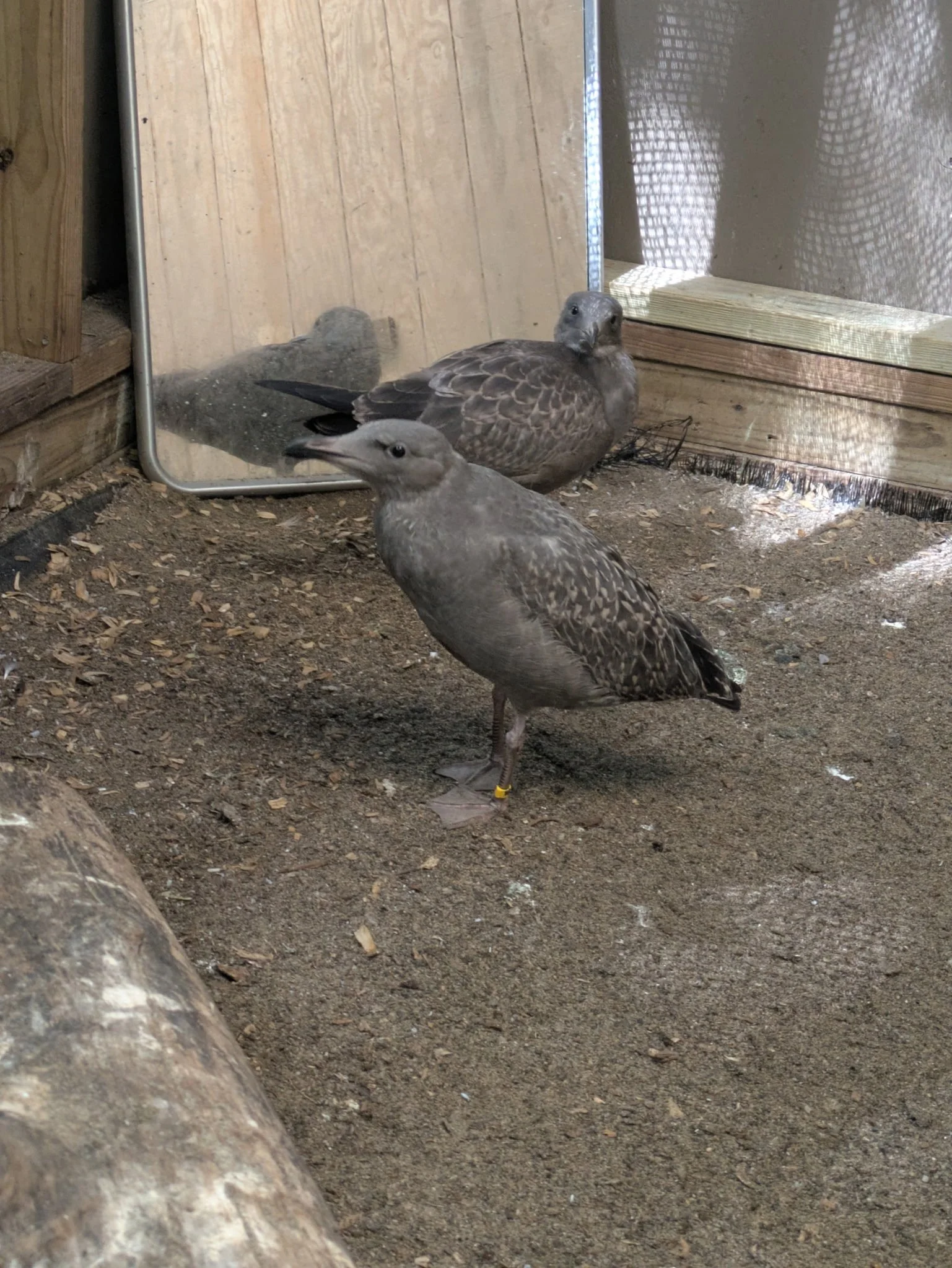
If you've been out and about in Portland lately, you may have noticed them: fuzzy, mottled, gangly young gulls wandering around rooftops, parking lots, and sidewalks, looking a little lost. They're not lost. They're doing exactly what young gulls are supposed to do this time of year.
But every summer, well-meaning people scoop these birds up, convinced they've found an orphan in distress. This year, we're seeing it happen more than ever — and we need your help to stop it.
They're Not Flying Yet — And That's Normal
Gulls don't go from nest to flight in one leap. After hatching, chicks spend several weeks on the ground or on a rooftop near their nest, walking around, flapping their wings, and slowly building the strength and coordination they need to fly. This is called fledging, and it takes time — often several weeks.
During this stage, a young gull may:
Walk or waddle around on the ground
Sit or lie down for long stretches
Flap without getting anywhere
Seem to have no adult in sight
None of this means something is wrong. It means the bird is exactly where it should be, doing exactly what it should be doing.
Their Parents Are Watching — Even When You Can't See Them
Gull parents don't hover directly over their chicks the way you might expect. They're often close by, keeping watch from a nearby roof, ledge, or perch, and they'll swoop in to feed or defend their chick when needed. Just because you don't see a parent doesn't mean the chick has been abandoned. In almost every case, an adult is nearby.
What To Do If You See a Young Gull
Leave it alone. This is the single most important thing you can do for a fledgling gull. They are wild animals, and even brief human contact can cause serious harm.
Don't feed it. Human food isn't appropriate for a wild gull's diet, and feeding fledglings can interfere with the natural process of the parents teaching them to forage.
Be careful when driving. Fledgling gulls spend a lot of time on the ground and don't yet have the flight skills to get out of the way quickly. If you're driving through an area with nesting gulls, slow down and keep an eye out. That said — gulls at this stage are vulnerable to people, not to cars or other wildlife, as long as drivers are paying attention. A little extra caution behind the wheel goes a long way.
Don't approach or try to "rescue" it. A gull standing, walking, or even lying down on its own is not automatically in trouble. Unless a bird is visibly injured, bleeding, has a broken wing, or is in immediate danger, the best thing you can do is walk away and let nature take its course.
Why "Rescuing" Can Actually Harm Them
This is the part people often don't realize: young gulls are highly imprintable. Imprinting is the process by which a young bird learns what it is — literally, what species it belongs to — based on the individuals that care for it in its earliest weeks of life. When a healthy fledgling is picked up and cared for by humans, even briefly, it can begin to imprint on people instead of its own kind.
An imprinted gull may lose its natural fear of humans, fail to learn how to forage or interact appropriately with other gulls, and in some cases become unable to be released back into the wild at all. In other words, the very act of "saving" a healthy fledgling can take away its chance at a normal wild life.
This is why, at Avian Haven, we do not take in healthy fledgling gulls. We only accept a full fledgling if it is sick, injured, or in genuine distress. A bird that is simply young, grounded, and learning to fly does not need our help — it needs space.
Right Now, We're Caring for 26 Young Gulls
That doesn't mean we're not busy. As of this week, Avian Haven has 26 juvenile and fledgling gulls in our care — and some of these birds don’t need to be here. Every one of these birds requires daily feeding, housing, and medical attention as they grow strong enough to be released.
Caring for this many birds at once, in the middle of our busiest season, takes real resources — food, staff time, veterinary care, and enclosure space. If you'd like to help us continue this work, a donation today goes directly toward the birds currently in our care and the ones still to come this season.
Support Maine's wild birds this fledge season →
The Bottom Line
If you see a young gull that's grounded, wandering, or resting and it doesn't appear hurt: leave it be. Its parents are almost certainly close by, and it needs weeks — not minutes — to build the skills it needs to fly. The kindest thing you can do is give it space, drive carefully through the area, and let it be wild.
If you do come across a gull that appears injured, orphaned, or in genuine danger, contact Avian Haven at (207) 382-6761 before intervening. We're here to help the birds that truly need it — and to help the rest stay wild.
