
Our “Spark” Birds
Birders, and those who dedicate their life to wildlife, have a story about the moment a bird stopped them cold. A bird that made them look up, lean in, or turn the car around. We call that bird a "spark bird" — the species that lit the match.
This week, we asked members of the Avian Haven team to share theirs.
Laura, Admissions Coordinator | Spark Bird: Osprey
It started as a commute ritual. Laura was working on Cape Cod when she began photographing a pair of ospreys each morning from her car — what she laughingly calls her "car office." What followed was a summer-long front-row seat to one of nature's most compelling dramas: nest construction, egg-laying, territorial standoffs with rival ospreys, and the devastating loss of the male — followed by the arrival of a new partner who stepped in to help raise the young.
Then came the fledglings. The hopping. The tentative first flights. The returns.
"It was so much fun," Laura says. "I had to do it again the following nine summers."
Nine summers. That's not a hobby — that's a calling. And it brought Laura, eventually, to a place where she spends her days helping injured and orphaned birds find their way back to the wild.
Wesley, Rehabilitation Tech | Spark Bird: Eastern Phoebe
Some spark birds don't arrive with drama. They arrive on your porch.
Eastern Phoebes have been nesting at Wesley's home for as long as he can remember — returning each spring, raising their young, going about their lives just outside the door. That constancy, that proximity, did something. It built in him, from a young age, a quiet attentiveness to the wild world — and eventually brought him here.
There's something fitting about a Phoebe as a spark bird. They're one of the earliest migrants back to Maine each spring, and one of the most faithful — returning year after year to the same nesting sites, the same porches, the same people. They have a way of making themselves part of your life before you've quite decided to let them.
Grace, Seasonal Rehabilitation Assistant | Spark Bird: African Penguin
Not every spark bird lives in the wild. Grace's found her at the New England Aquarium — where she was working at the time — a one-eyed African Penguin named Lambert, one of the oldest birds in the colony, living out his senior years in the geriatric section of the penguin exhibit.
"I had a soft spot for him," Grace says. And it shows: she learned his preferences, helped with his health checks, and made sure feeding time with Lambert was something they both looked forward to.
There's a through line between Lambert and the work Grace does now. Rehabilitation is, at its core, about paying close attention to an individual animal — reading its needs, earning its trust, showing up consistently. Lambert, it turns out, was good practice.
Erin, Rehabilitation Assistant | Spark Bird: Snowy Egret
Erin was driving home after a long day at an animal hospital when she spotted something in the road ahead: a Snowy Egret, motionless in traffic, a stranger already pulling over to help.
She pulled over too. Then she started making calls — to a local wildlife rehabilitator, to her veterinarian coworker, to the clinic's head vet. She sat in a CVS parking lot with a bird wrapped in a warm blanket, waiting for clearance to bring it in.
The egret died on the way — but not alone, and not in the road. When Erin and her colleague examined the bird, they found what had felled him: a snapping turtle had severed two of his toes, leaving necrotic tissue behind. The injury was unsurvivable.
"It was the first time I realized I could do medical care on birds," Erin says.
She'd been considering exotic animal medicine. But this — a single egret, a parking lot, a quiet confirmation — opened a door she hadn't known was there. Birds, it turned out, were where she was meant to be.
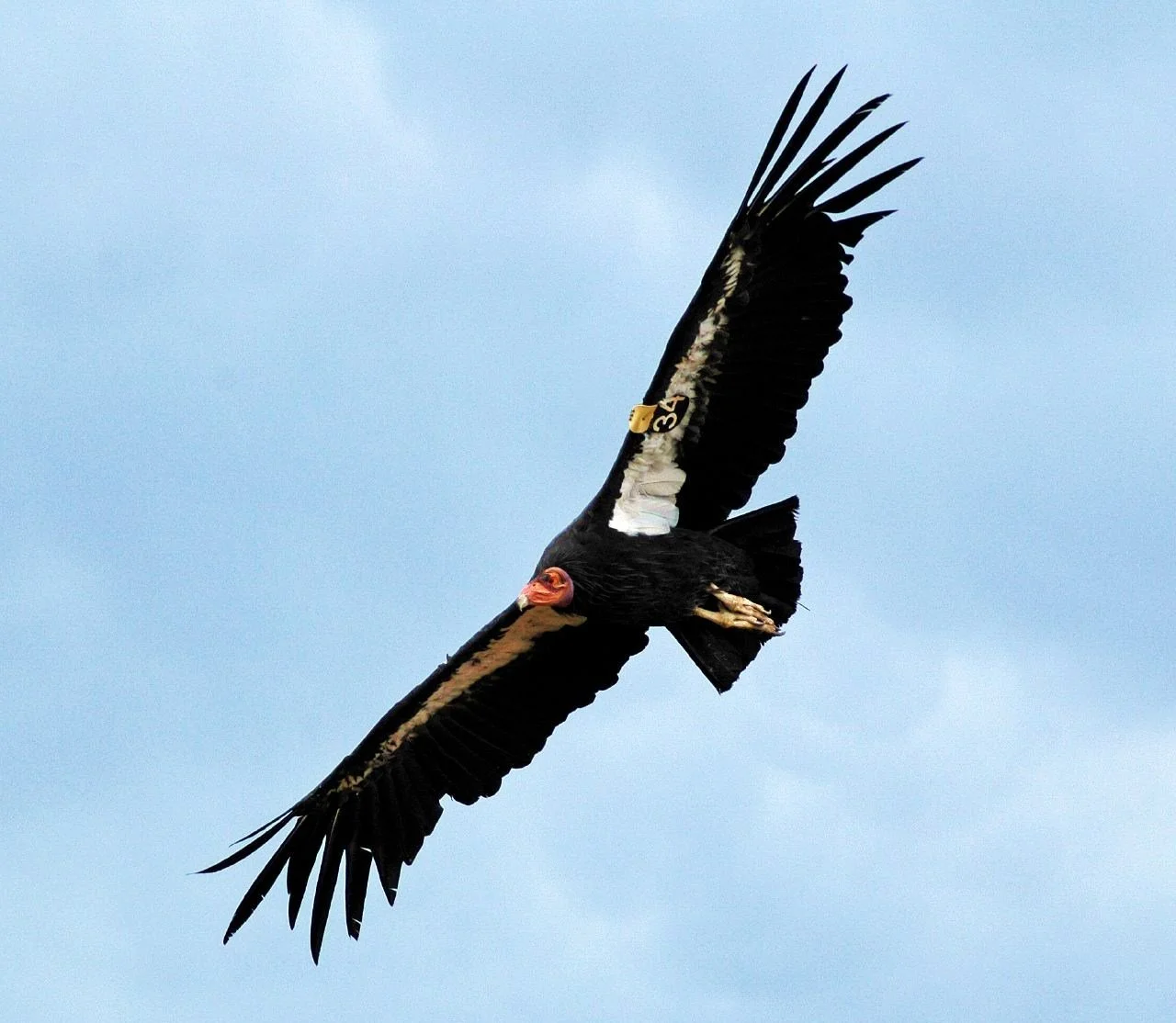
Barb, Executive Director | Spark Bird: California Condor
Barb's spark didn't come gently. It came with the weight of extinction.
Her first job after high school was as a wildlife firefighter for the Los Padres National Forest, stationed on the boundary of the Sespe Condor Sanctuary. At the time, there were no California Condors left in the wild — not one. They were being bred in captivity, the species balanced on the thinnest possible edge. The condors were eventually reintroduced successfully, but the experience planted something in Barb that wouldn't leave: the knowledge that birds can disappear.
Later, in the Peace Corps, stationed on the shores of Lake Atitlán in Guatemala, Barb spent two years searching for the Atitlán Grebe — a flightless bird endemic to that single lake. It had not been seen in years when she arrived. She looked for it the entire time she was there. It was later declared extinct.
"These two things sparked me to want to do something to help birds," she says simply.
That something became Avian Haven.
What's Your Spark Bird?
We'd love to know. Whether it was a backyard chickadee that made you stop and really look, or a chance encounter that redirected the course of your life — every bird story matters. Reply to this email and tell us yours. We may share some of your stories in a future newsletter.
And if you've been moved by the birds in your life, consider making a gift to support the work happening here in Freedom, Maine — 365 days a year, for every bird that needs us.
