
She drives thousands of miles to save wild birds
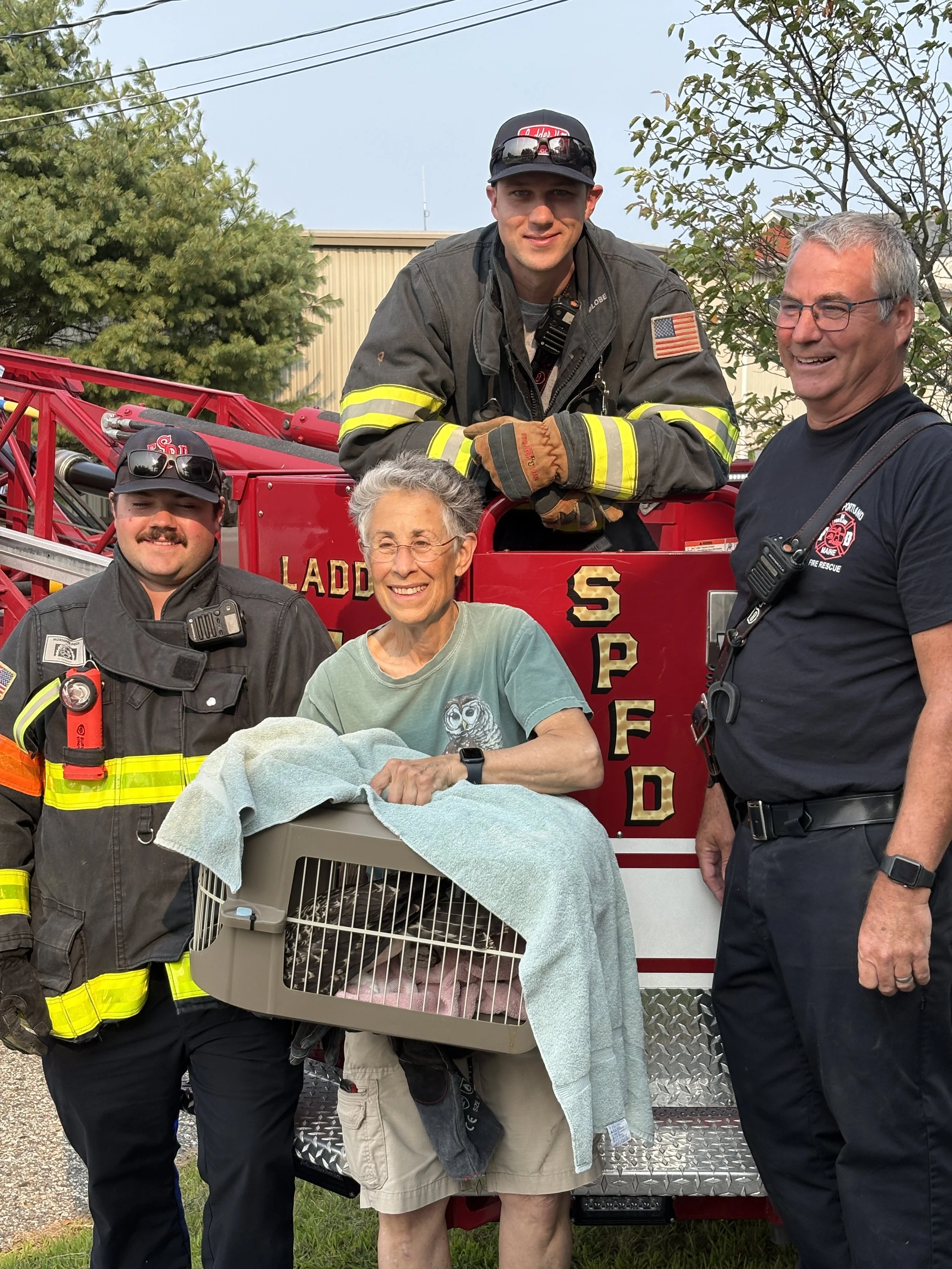
This Volunteer Appreciation Week, we want you to meet one of the people who makes our work possible.
When Karen Silverman retired, she knew she needed something more. "I said, I need to do something else. There's something I need to add to my routine."
She had no background in wildlife care. She'd just started casually birdwatching. But when she saw Avian Haven looking for volunteer transporters on Facebook, something clicked. In October 2014, she made her first transport run.
Since then, Karen has become one of the most dedicated transporters Avian Haven has ever had — and right now, as baby bird season arrives, her work matters more than ever.
This is the season when everything is fragile.
Fledglings fall from nests. Nests get knocked down in storms. Well-meaning people find baby birds on the ground and don't know what to do. That's when the phone rings for someone like Karen.
And Karen is ready. Her car is, too. At any given moment, it holds boxes in three sizes, rubber gloves, heavy raptor gloves, long-sleeved gloves for biting gulls, lightweight gloves for everything in between, butterfly nets, large nets, blankets, towels, old t-shirts for makeshift nests, masks, collapsible road cones, galoshes, and metal-cutting clippers. "But wait, there's more," she laughs.
She didn't arrive knowing any of this. She learned it over twelve years of showing up.
In 2024, when Avian Haven was short on transporters, Karen transported 757 birds and drove 12,701 miles. She held 222 birds overnight in what she affectionately calls her "bird B&B," keeping things quiet and calm, doing everything she could to minimize their stress.
Not every bird makes it. Karen knows that better than most. But she holds onto something: "With all the birds I lost, I only think about the good stuff. Those birds only made it because we brought them in."
What keeps her going out, call after call, year after year? She'll tell you it gives back as much as it asks. "I may not be feeling all that well, and I'll go out on a call, and I'll rescue a bird, and all of a sudden I'll feel 100% better,” she said. “Kind of gets you out of yourself, as I say."
And then there's the moment she can never quite get used to — coming face to face with a wild creature and being trusted, however briefly, to help. "How did I get so lucky to be able to hold and try to help... to be up so close?"
And some of her favorite moments aren't transports at all. They're renestings.
Sometimes, when Karen arrives on a call, the best thing she can do is find a way for the babies to stay exactly where they are — with their parents. A robin's nest destroyed in a garden? She fashioned a makeshift nest from plastic with drainage holes poked in, tucked it nearby, and stood back. The parents found it. A nest accidentally cut down from a bush? She refashioned it, repositioned it in the same shrub, and the parents returned. "It's so much better that the parents take care of the babies," she says simply. "That's a whole bunch of little babies that Avian Haven doesn't have to take care of."
It's this kind of knowledge — quiet, earned, practical — that only comes from years of caring.
Baby bird season is Avian Haven's most demanding time of year. Injured and orphaned nestlings and fledglings arrive daily, each one requiring round-the-clock feeding, warmth, and expert care before they're ready to return to the wild. We depend entirely on donors like you to make this possible.
Will you make a gift today to support the baby birds coming through our doors this season?
Every donation funds the feeding, housing, and medical care that gives these birds a fighting chance. And it supports the entire network — the rehabilitators, the staff, and the volunteers like Karen who meet them on roadsides, in backyards, and at the edges of marshes, and get them safely to us.
Karen says it best: "If a bird happens to have a chance, you can be the one that helps it out. It's an honor."
We think so too.
