
Meet Avian Haven's Consulting Veterinarian: Dr. Avery Berkowitz
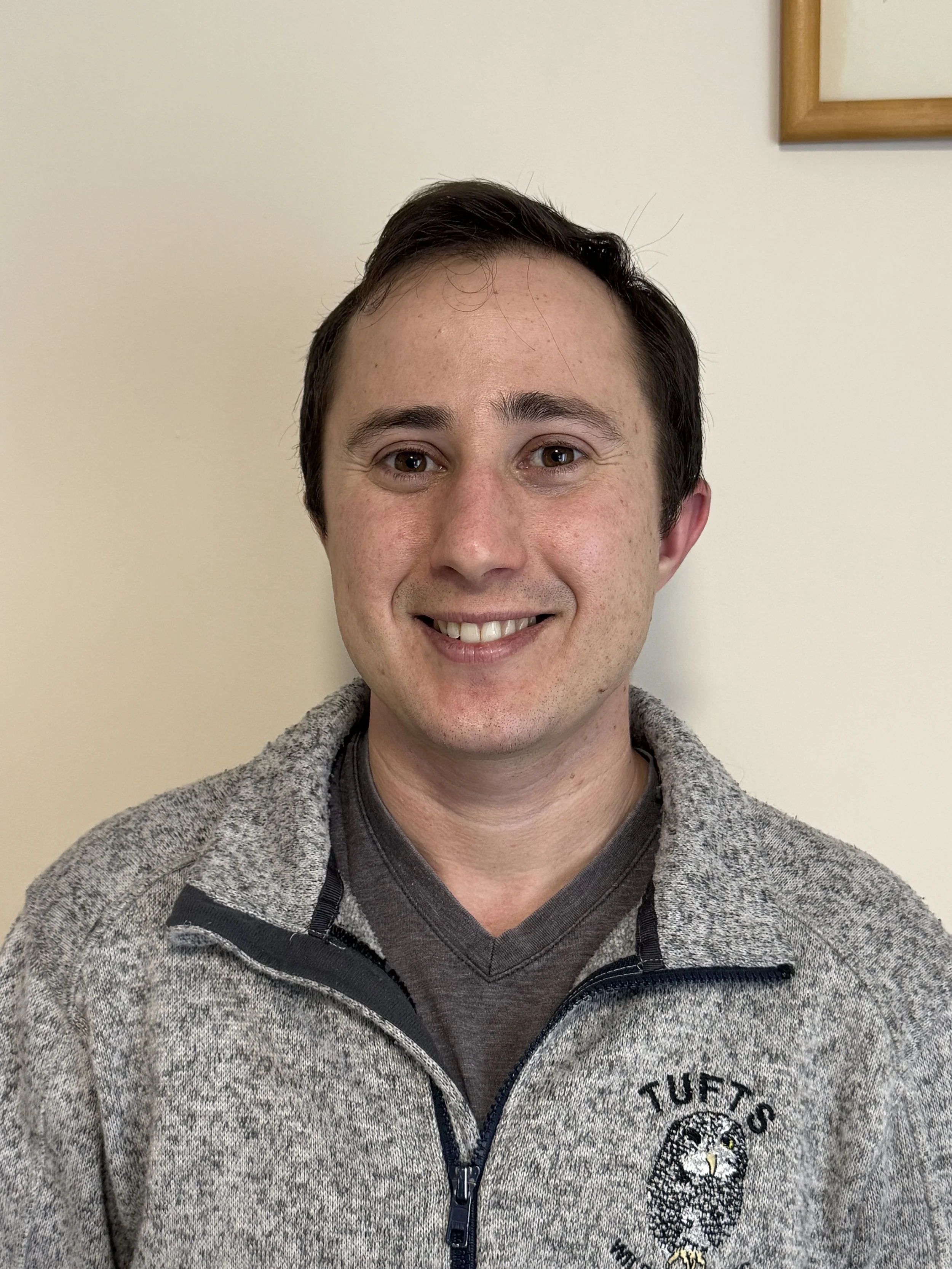
At Avian Haven, the birds in our care receive the best treatment we can possibly provide — and behind that commitment is a team of skilled, dedicated professionals who bring both expertise and heart to this work. We're thrilled to introduce a key member of that team: Dr. Avery Berkowitz, our new Consulting Veterinarian.
Dr. Berkowitz's path to wildlife medicine started early. By age 16, they had already arranged to volunteer at a wildlife rehabilitation center in their home state of Oklahoma — having waited, they'll tell you, since second grade, when a classroom teacher first showed them that local animal rehab work was possible. That early spark never dimmed. They went on to choose Tufts Cummings School of Veterinary Medicine in large part because of its Wildlife Clinic, knowing that real expertise in this field isn't built in a classroom — it's built through hands-on experience alongside the animals themselves.
Since then, Dr. Berkowitz has spent 16 years continuously involved in wildlife rehabilitation in some capacity, across multiple facilities and regions of the country. Before establishing their current practice in Maine, Maine Wildlife Rehabilitation, they sought out the nearest rehab center wherever they lived and found a way to contribute.
A field still finding its footing — and why it matters
One of the things that makes Dr. Berkowitz such a valuable partner for Avian Haven is their deep investment in advancing the standards of wildlife medicine as a whole. They're the first to acknowledge that this is a young field — one that evolved from individual home rehabilitators working in isolation, often without access to established protocols or specialized equipment. Much of what veterinarians do today for injured birds requires creative problem-solving that simply didn't exist a generation ago.
"We've had to evolve as a field to figure out what works for these different species," Dr. Berkowitz explained. When commercial orthopedic pins don't come small enough for a tiny songbird's fractured bone, you improvise with spinal needles. When standard endotracheal tubes are too large for a patient that weighs less than an ounce, you find an adapter. These solutions exist now because people like Dr. Berkowitz share what they've learned — at conferences, through networks, and in partnerships like the one they're building with us.
They're also a passionate advocate for applying the same standard of medical care to birds that we take for granted with cats and dogs. "I think a lot of people don't focus on birds, or don't treat birds to the same standards as mammals," said Dr. Berkowitz. Changing that, one patient and one practitioner at a time, is part of what drives them.
What this partnership looks like in practice
Dr. Berkowitz will be at Avian Haven every week, leading veterinary clinics that give our staff the opportunity to deepen their knowledge, work through complex cases, and continue building the kind of hands-on expertise that can't come from a textbook. When our patients need advanced medical intervention — surgeries, difficult diagnostics, specialized care — Dr. Berkowitz will be there to lead the way.
We're already seeing what this collaboration makes possible. Right now, a Peregrine Falcon is in our care, recovering from an injury and working toward one goal: flight. Treated by Dr. Berkowitz, this bird is progressing through rehabilitation with the kind of skilled, attentive care that gives it a genuine chance at returning to the wild. The Peregrine Falcon is one of Maine's most iconic and magnificent birds — watching this one get stronger each day is exactly why this work matters.
Why collaboration is everything
Ask Dr. Berkowitz what they'd most like to see change in wildlife rehabilitation, and the answer comes quickly: more collaboration. The field's origins — independent, sometimes territorial, scattered across the country — have historically worked against the kind of knowledge-sharing that accelerates progress. They see that changing, especially as a new generation of rehabbers enters the field, and they're committed to helping guide things in that direction.
Their partnership with Avian Haven is part of that vision. "If we're not networking and sharing what we're doing, then we can't raise the standard of care," they say. "We can collectively generate better ideas and solutions — that's how new protocols actually get created."
For the birds in our care, that collaboration means more, and better, medical options. And for Avian Haven, it means having a veterinary partner who doesn't just show up when we need them — they're invested in building something lasting.
We're deeply grateful to have Dr. Berkowitz on our team, and we're excited about what this partnership means for the birds of Maine.
