
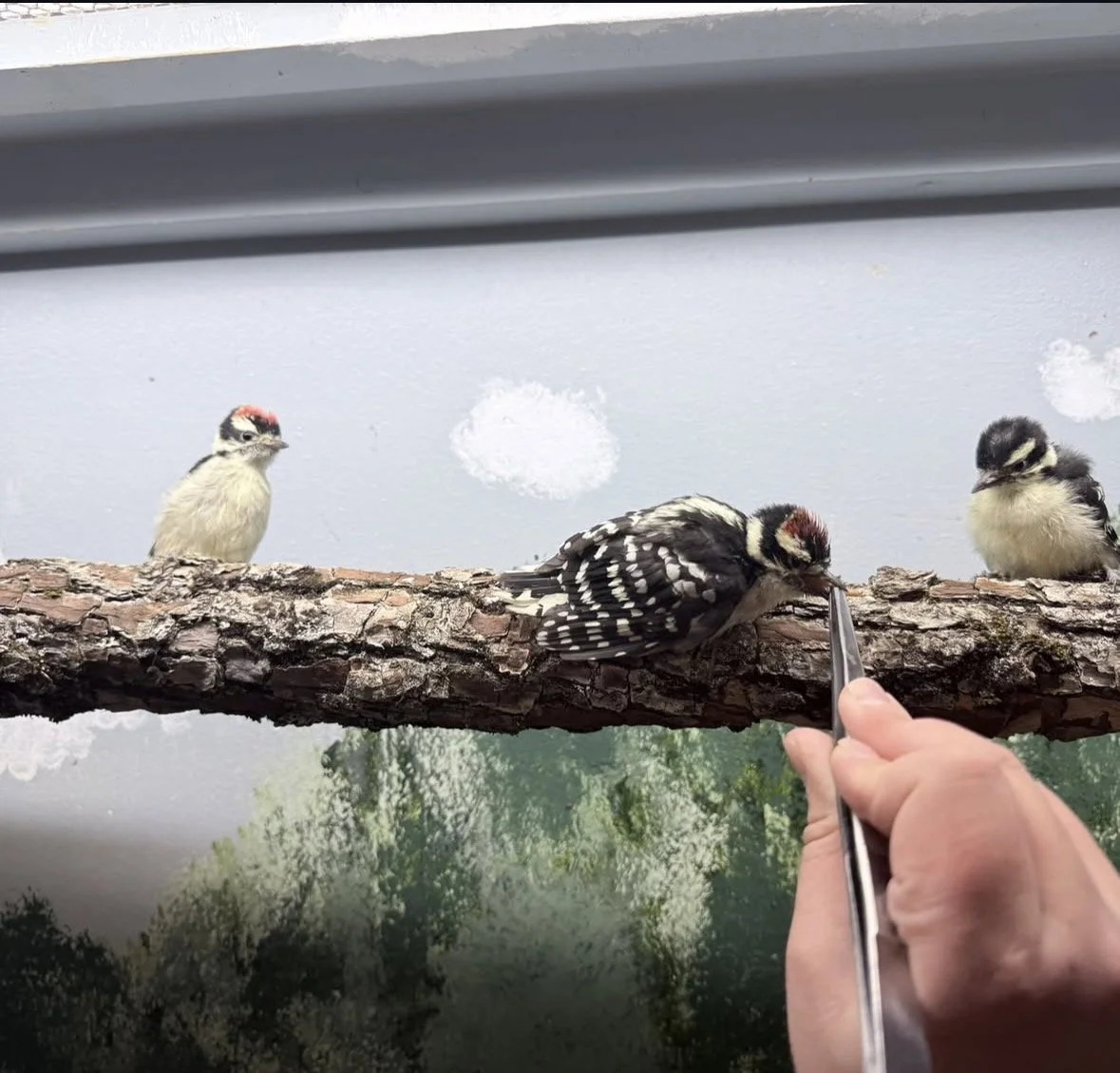
Every year, Avian Haven answers 12,000+ calls and takes in about 3,000 birds. Most of those calls never become an intake. They're a chance to help someone understand the bird in front of them.
That's the quiet power of wildlife rehabilitation. It heals birds, and it changes people.
How far we've come
Wildlife rehabilitation is a young field. When Dr. Mark Pokras, retired wildlife veterinarian and loon specialist, became a licensed rehabilitator in the early 1970s, few veterinarians knew about treating wild birds. "The veterinary community didn't know anything about this stuff," he recalls. That gap is what drove him to become a veterinarian himself.
Today, the picture is very different. National organizations, strong state associations, and shared research have transformed the quality of care. "It is so dramatically improved," says Dr. Pokras, who went on to spend more than 30 years on the faculty at Tufts University and helped found rehabilitation groups across New England and New York.
The people behind the care
What hasn't changed is how much the work asks of the people who do it. Dr. Pokras estimates that of every 50 people who get a rehabilitation license, perhaps 10 are still at it two years later, and only one or two after ten years. "It takes a lot of dedication," he says, and often personal time and money as well.
At Avian Haven, that dedication comes from a team of 11 full-time staff, seven of whom care for birds hands-on. They're joined by four interns each year and about 120 volunteers who transport birds from across Maine and help on site. We are in our 27th year of operation.
Training matters as much as heart. Each year, our interns learn alongside experienced staff how to care for baby birds, the basics of triage, and the diet and care of adult birds. They leave with hands-on skills the field needs for its future.
A window into people's lives
Why does rehabilitation matter, when wildlife agencies often focus on whole populations rather than single animals? For Dr. Pokras, one of the biggest answers is education.
Years ago, he helped survey people who brought animals to a rehabilitation center. Many had no prior interest in nature. They didn't belong to conservation groups or keep bird feeders. Then they found an injured animal in their backyard.
"All of a sudden, you got this window into their lives," he says, "and you got five minutes, while they're standing in your waiting room with a cardboard box, to try and broaden their horizons a little bit."
That's what happens thousands of times a year on our hotline. Most of the 12,000+ calls we receive are educational: helping someone decide whether a fledgling needs help, keeping a family safe while they contain an injured bird, or explaining how to prevent the next window strike. Every call is a chance to turn concern into lasting care for wild birds.
Data that helps wild birds
Each bird in our care also adds to what scientists know. We share data with the State of Maine on endangered and threatened species, including how each bird came into care and how it progressed, and on other species as needed. That information helps the state understand what's happening to birds on the ground.
Dr. Pokras sees even more potential. Field biologists, rehabilitators, veterinarians and state agencies each hold different pieces of the puzzle. "Nobody's got an overview," he says. Bringing that information together could help us understand why birds get sick and what we can do to protect them.
What comes next
The field still has room to grow. Dr. Pokras hopes to see rehabilitators, scientists and agencies sharing information more openly, and more effort to learn how released birds fare once they're back in the wild.
Avian Haven wants to help lead that work: raising standards of care, training the next generation of rehabilitators, and making sure every caller leaves knowing a little more about the birds around them.
When you support Avian Haven, you help more than the bird in the cardboard box. You help the family who brought it, the next person who calls our hotline and the scientists working to protect Maine's wild birds.
You can also make a gift that lasts beyond your lifetime. Including Avian Haven in your will or estate plan makes you part of our Wings Forward Legacy Circle. Learn more at avianhaven.org/wingsforward.
Thank you for caring about Maine's wild birds.
Donate today to help wild birds get back to Maine’s forests where they belong.
You can also order one of our snazzy new Barred Owl hats here, and all profits go to support Avian Haven.
