
A Day in the Field - Together
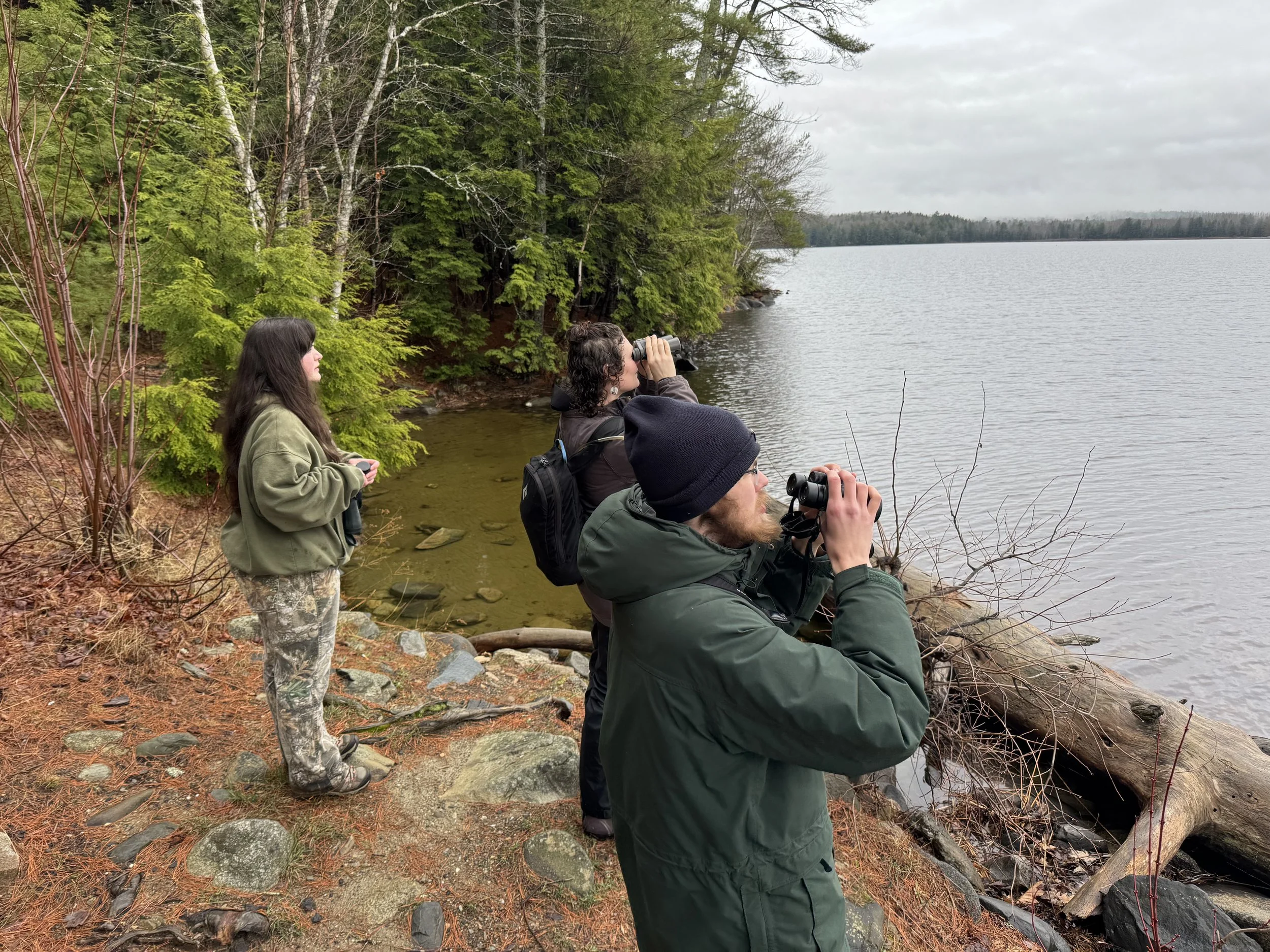
On a recent spring morning, the Avian Haven team gathered at Fields Pond in Holden for a day away from the facility — to prepare for the busy season and connect with each other.
Fields Pond is the kind of place our birds are always working their way back to: wooded trails, open water, marshy edges — and a great bird feeder station near the info center that attracts a variety of songbirds — enough to keep even experienced birders guessing what's around the next bend. By mid-morning, our species list was approaching 40: warblers moving through the canopy, tree swallows sweeping through the air and landing to look at the houses made for them, mallards and other ducks at the pond. A Common Loon passed overhead, its silhouette unmistakable against the sky — one of those sightings that makes the whole group stop and look up at once, and then look at each other.
Then came the moment no one will forget. Moving along a wooded path, we nearly walked right past her — an American Woodcock, sitting still on her nest. The instant she sensed us, she launched into a broken wing display: dragging one wing along the ground, fluttering and stumbling away with a performance of injury so convincing that it almost tricked us.
She wasn't hurt, of course. She was protecting her chicks — doing exactly what evolution has spent thousands of years perfecting. We stepped back, gave her space, and left her alone to return to her chicks. There was something quietly moving about watching that moment as a group — people who have spent years caring for injured birds, who know better than almost anyone what real distress looks like, still feeling that instinctive pull to help. For a team that regularly receives birds brought in by well-meaning people, it was a gentle reminder: not every bird that looks distressed is in danger. Sometimes the most helpful thing is simply to walk away.
Seeing birds in their wild habitats is a reminder that the work we do matters — that even though it can take a toll to see so many injured, orphaned, and sick birds everyday at our facility, getting them back out into spaces like these makes a real difference.
The morning held a few more gifts. Our rehab crew found an owl pellet on the trail and carefully pulled it apart to reveal what was inside: a jawbone, a leg bone, the delicate record of a meal. Elsewhere, the group collected a bag of litter along the shoreline — a quiet act of care, but one that felt right for people who spend every day giving injured birds a path back to the wild.
By the time we sat down for breakfast together, there was plenty to talk about. Conversation turned to something we don't always make time for mid-season: what makes us a team. Not just the protocols that hold our work together, but the values and trust underneath them — the shared belief that every bird matters, and the quiet ways that belief shows up in how we treat each other and the work. People talked about what sustains them through a hard baby bird season, how they see teamwork already working, and what we could improve. It's the kind of conversation that seems to happen most naturally after a morning like that one — after you've been surprised, delighted, and quietly humbled, all before 10 a.m.
Rehabilitation work is demanding, and the commitment it asks — from our staff, our volunteers, and our community of supporters — is real. Days like this one refill something the daily work can quietly empty. We're grateful to everyone whose generosity makes mornings like this possible.
