
Birdwatching in Maine, a Q&A with Derek Lovitch of Freeport Wild Bird Supply
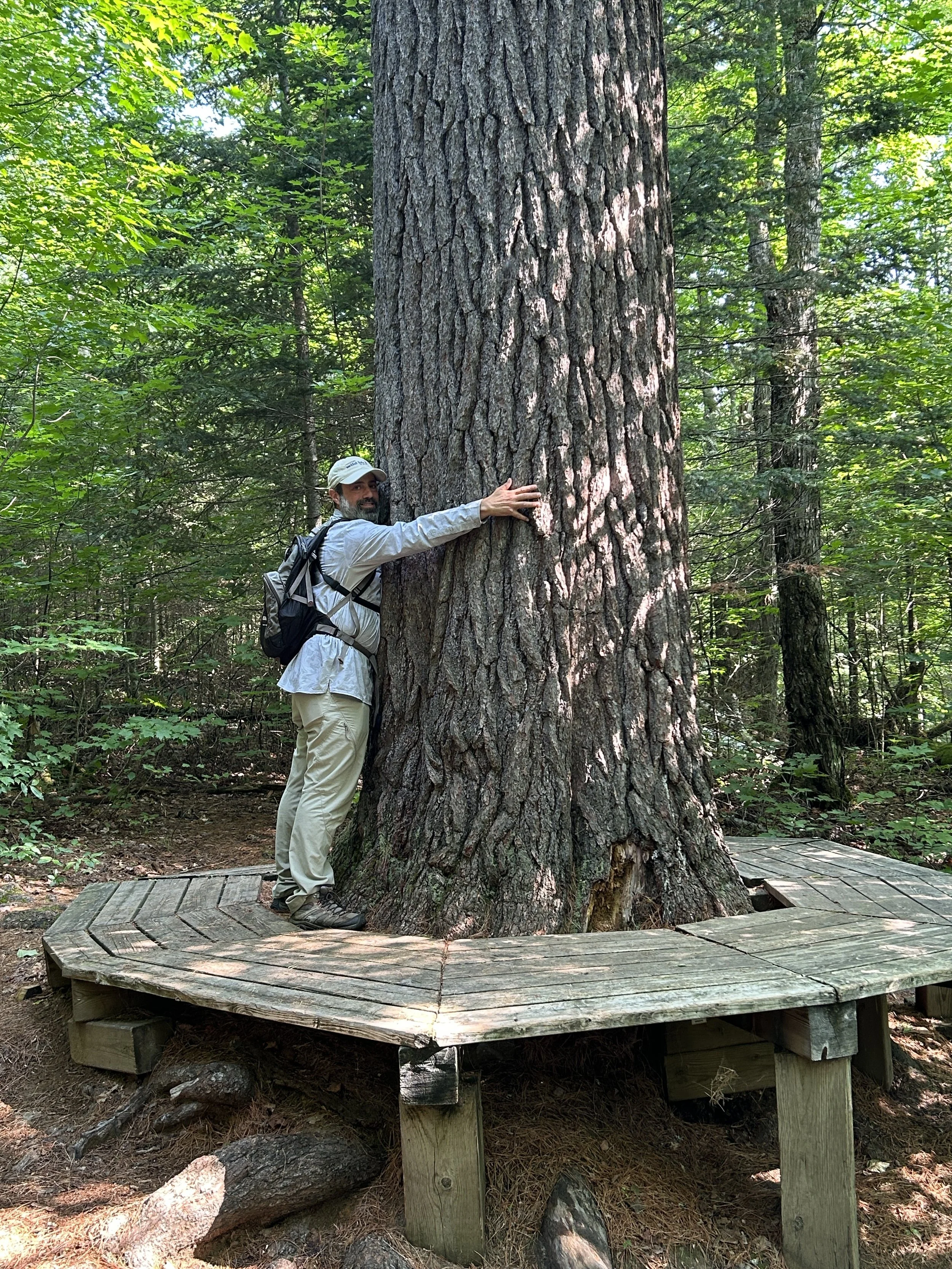
It is high summer, and in the newsletter this week we’re sharing more about birdwatching in Maine (something you might be doing a bit more of right now) by asking a few questions of Derek Lovitch, owner along with his wife Jeannette, of Freeport Wild Bird Supply. The store serves as a vehicle for Derek to continue to share his enthusiasm for birding, birds, and bird conservation. The store is also the home base for a growing tour guiding operation, specializing in Maine's specialties and instructional learning experiences. His first book, How To Be a Better Birder, was published in March 2012 by Princeton University Press. His second book, Birdwatching in Maine: A Site Guide was published in May 2017 by the University Press of New England. A completely revised and updated 2nd Edition was published by Brandeis University Press in February, 2024.
What first drew you to birds and made you want to make this your life's work?
DL: I honestly don’t know. I chalk it up to a natural evolution of a “normal” young boy who was into dinosaurs, and then I realized there were dinosaurs in my backyard! While I do have a series of bird-related memories as a child, there is no one particular moment, bird, or influential person that sparked it. It just happened!
As for making it my life’s work, I began a career as a field ornithologist/biologist, started moving towards being more of an educational naturalist and tour guide, and realized that since I have always been beyond passionate about birds and birding, I would be hard pressed to do anything else and enjoy it (and I worked plenty of non-bird-related jobs in my life!). After my fiancé at the time, now wife, and I moved to Portland for “a few months,” we decided to find a way to stay here and the (very long story short) store became the vehicle to do that, as it gives us an umbrella to not just make a living talking about birds, but includes our tour business, advocacy, and conservation work.
Do you have a favorite bird or family of birds?
DL: Not really. I usually say my favorite bird is whatever I am looking at at the moment, but I tend to gravitate towards observation of “visible migration” especially in raptors and shorebirds.
What are your tips for becoming a better birdwatcher?
DL: Well, since I wrote an entire book entitled “How to be a Better Birder” I’ll try to be brief! But I think the most important thing is to observe. Watch. Put the watching back in birdwatching is what I say. Lists are great, as is competition, but I think as a birding community we are losing the ability to really observe. I recommend putting the phone down until the bird is gone (at the earliest!) and look closely and observe. What is it doing? How does it do it? Why might it be doing it? If we don’t yet know the identification, maybe make some written notes about this. Watch it sing; we can remember birdsong much easier if we watch the bird making the sounds. The more we watch a bird, the easier it will be to learn the identification tools needed to decipher its identity with even the quickest of looks.
Is there special equipment you would recommend?
DL: A good pair of binoculars is a must, although “good” does not have to mean expensive. There are good binoculars in every price range. For example, at our store, we sell birding optics that range from $99.99 to $3,000. But there are also a lot of binoculars – also at every price range – that are simply not good for birding. I highly recommend a real, paper, field guide book instead of apps for a variety of practical and neurological issues, and I encourage a field notebook. I’m no Luddite, but I think technology is less effective at teaching about birds than the old-fashioned way.
What are the best places in Maine to go birding?
DL: I wrote an even bigger book, “Birdwatching in Maine: A Site Guide” and a fully revised edition “Birdwatching in Maine: The Complete Site Guide” so once again, I will try to keep this brief. But my goal for the books was to show that there is great birding everywhere in Maine, from top to bottom and side to side! Granted, coastal locations tend to have the most specialties and diversity overall, but a good rule of thumb to see more birds wherever you are is “just add water,” like a pond, river, coastline, or even just a clean birdbath. What’s great about birding is you can do it anywhere, at any time, as there are birds all around us wherever we live, even in the middle of a city.
Also, the “best” places vary seasonally or depending on what birds or group of birds you want to look at. I can’t even say “outside” as a simple answer as some great birding can be done from a window (treated with various techniques to reduce or eliminate bird strikes of course!) looking out at feeders or a garden. Therefore, the best place to go is wherever you are and whatever you are able to do.
I’ll try to actually answer your question though by listing some of my personal favorite birding locations: Monhegan Island in spring and fall migration, Biddeford Pool and environs throughout most of the year, our Bradbury Mountain Spring Hawkwatch (March 15th through May 15th), Florida Lake Park in Freeport in April and May, Scarborough Marsh throughout the year, Fort Foster in Kittery in migration, and anytime I can escape to Washington County.
What should folks look forward to seeing bird-wise in the fall migration coming up? Are there places you particularly like to see migratory birds?
DL: “Fall” migration is actually underway at the end of June, with the first southbound, non-breeding shorebirds, so it’s been going strong for almost two months now! Many shorebirds peak in August, and most passerines peak in September, but rarities trend upwards by the end of October. While I touched upon some migration hotspots above, in August you’ll likely find me on mudflats at low tide or saltmarsh “salt pannes” at high tide, such as in Scarborough Marsh. Other great shorebird locations include the Lubec Flats, Reid and Popham Beach State Parks/Sewall Beach, and the Biddeford Pool area. By September, I am focused more on songbirds, so when I am not on Monhegan, I will be at Sandy Point Beach on Cousin’s Island in Yarmouth for the “Morning Flight Phenomenon” anytime conditions and my schedule allow, and will be at “my office” on the bridge as often as I can through early November. By then, it’s “Rarity Season” and coastal “migrant traps” or unique habitats inland are all fair game.
If there was one thing you could change about the way humans interact with birds, what would it be?
DL: Yikes, I have to keep this to only 1? That’s harder than summarizing a book in one paragraph! I’ll stick to the big picture then: let’s appreciate and respect them as important fellow beings on this magical place we call Earth. They are not just checkmarks on a list, they are amazing and incredible, highly-evolved creatures that deserve our respect and attention and compassion. And they’re important! From pollination to pest control to scientifically-proven emotional and even sub-conscious mental health benefits, we need them too. So let’s start by caring about them, always, and making smart decisions that are good for them, too, as if our life (as we know it) depends on it, because they do.
Anything else you'd like to share with our readers about the birds of Maine?
DL: So many of our birds are declining, and so many decisions we make are putting birds at risk. But by keeping cats indoors and by treating our windows to reduce or eliminate collisions, we can save literally billions (yes, with a B, that is not a typo nor exaggeration) of birds each year on this continent! Protecting habitat, planting native species, reducing pesticide and chemical use, keeping plastic out of the ocean, being educated consumers, and advocating for birds are all things we can do that cumulatively will make a world of difference.
And in the meantime, we live in such a remarkable place for birds that we need to take a few deep breaths, go out and watch, listen, appreciate, and enjoy. It’s good for us, and it will be good for them too! There are so many amazing and awesome birds right outside our doors.
We hope you enjoyed this interview and it helps you as you go out and watch birds near you this summer!
