
What a Central Park Owl Can Teach Us About the Wildlife in Our Own Backyards
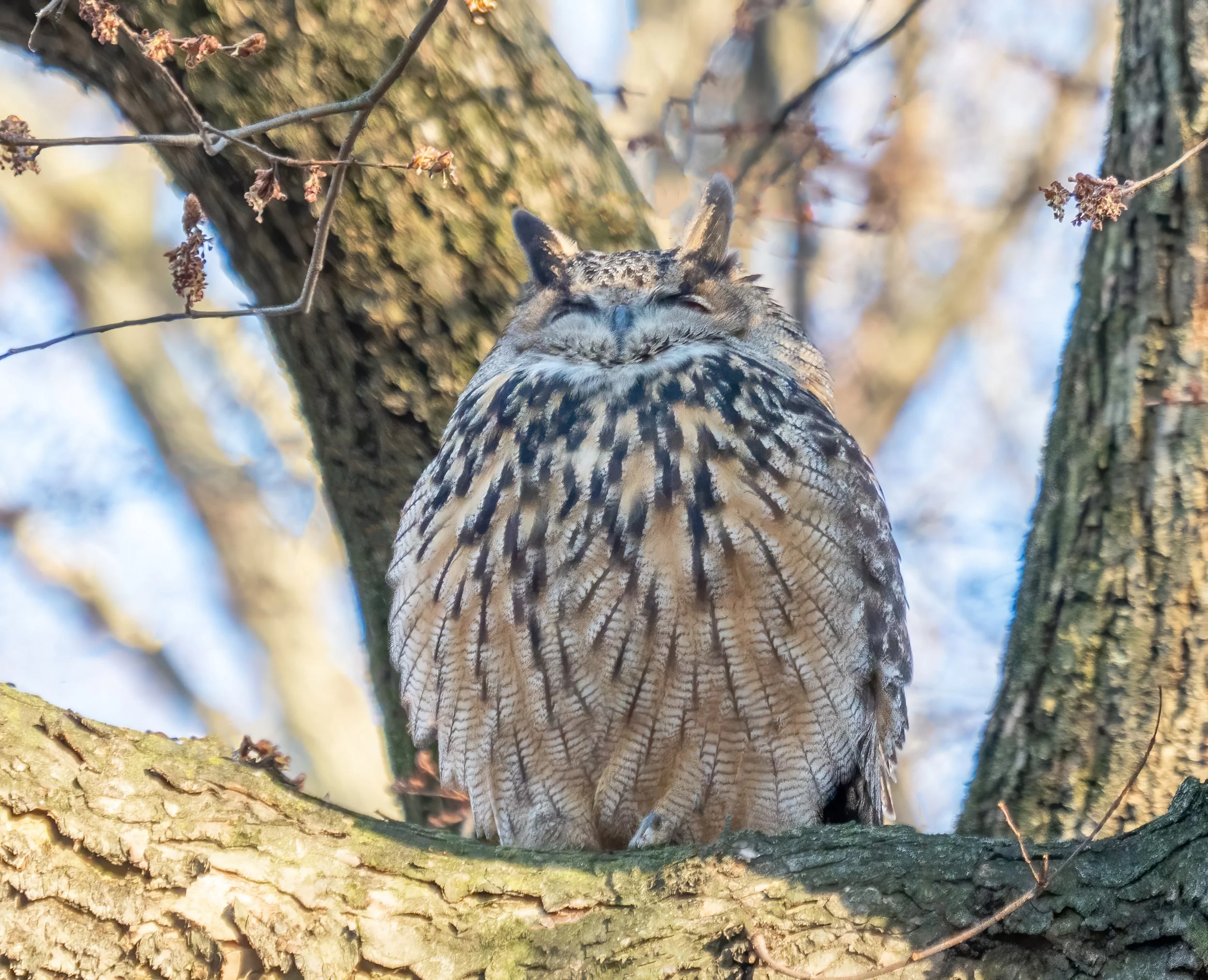
Four different anti-coagulants. That's what was found in the bloodstream of Flaco, the Eurasian Eagle-Owl whose escape from the Central Park Zoo captivated New Yorkers — and whose death one year later has become a rallying cry for wildlife advocates everywhere.
If you haven't heard Flaco's story yet, a new documentary, Wild Inside, tells it in full. We think it's worth your time, and we think it says something important about the work we do here at Avian Haven.
Flaco had lived his entire 13 years in a Central Park Zoo enclosure when vandalism to his exhibit led him to escape in February 2023. Zoo staff initially tried to recapture him — he'd never hunted, and his wings weren't in shape for sustained flight. But something remarkable happened. Flaco began catching rats and pigeons. He started flying farther and with more confidence. The zoo made the rare decision to let him stay free.
New Yorkers fell hard for him. Flaco t-shirts. Flaco tattoos. A baseball team named in his honor. Wild Inside features the everyday people who crossed paths with him — on fire escapes, in Central Park at dawn, uptown and downtown, young and old. For a lot of people, Flaco was the first wild bird they ever really noticed. His freedom seemed to wake a whole city up to the wildlife that had been living alongside them all along.
The part of the story that hits closest to home
Flaco died in February 2024 after colliding with a building — a common cause of death for city birds. But the necropsy found something else: four different rodenticide compounds in his system. Toxicologists believe the poisoning likely impaired his coordination and contributed to the collision.
This is the part of Flaco's story we know all too well.
The film features the Wild Bird Fund, Manhattan's wild bird rehabilitation center, who cared for Flaco's body and have treated thousands of raptors poisoned by rodenticides over the years. Here at Avian Haven, we see the same thing. When a rat or mouse eats poisoned bait, it doesn't die right away — it becomes an easy, sluggish target for the very predators that would otherwise keep rodent populations in check naturally. Owls, hawks, and eagles eat those weakened rodents, and the poison moves up the food chain into them. We treat raptors and owls every year for secondary rodenticide poisoning, and by the time symptoms are visible — lethargy, disorientation, uncoordinated flight — their condition is often already severe.
Flaco was a wild owl living in one of the most human-dense environments in the world. He shouldn't have had to compete with anticoagulants just for finding an easy meal. Neither should the owls and hawks quietly hunting rodents in your own backyard.
Flaco's legacy is already changing policy
Flaco's death didn't just move people emotionally — it moved legislators. New York's Bird Safe Buildings Act, which sets standards for bird-friendly building design to reduce fatal window strikes, was renamed the Feathered Lives Also Count (FLACO) Act in his honor. In New York City, lawmakers introduced three additional bills known as "Flaco's Laws." One of them establishes a rat contraceptive pilot program — an approach that reduces the rat population by preventing births, rather than by poisoning rats outright. It's a promising alternative that could shrink the demand for rodenticides in the first place, protecting the owls, hawks, and eagles that hunt those rats without anyone having to choose between pest control and a healthy food chain.
Maine and Rhode Island also enacted laws in June 2026 to limit, phase out, and largely ban consumer and commercial use of anticoagulant rodenticides. It's a good reminder that one bird's story, told well, can move more than hearts — it can move policy.
What you can do
The good news: rodent control doesn't have to poison the food chain. A few changes make a real difference:
🐤 Choose live traps or secured snap traps over rodenticide bait boxes
🐤 Seal up entry points, gaps, and food sources that draw rodents in the first place
🐤 Put up an owl nest box — a resident owl family can be one of the most effective, chemical-free forms of rodent control you'll ever have
🐤 Talk to your neighbors — poison doesn't respect property lines, and one rodenticide-free yard helps, but a whole street helps a lot more
Watch, and get inspired
If you want to see what a wild bird's instincts can do when they're finally given the chance, Wild Inside is worth watching. Flaco's story is bittersweet, but it's also a genuine testament to how much resilience, memory, and instinct are packed into wild birds, even after years away. It's the same resilience we see every day in the birds that come through our doors.
Every bird we treat for rodenticide poisoning is a reminder of why this work matters, and why we can't do it without you.
